


A 3D printer can become more than a creative tool. It can help you sell personalized products, offer local printing services, create digital files, or support rapid prototyping projects.
This article covers 10 practical ways to make money with a 3D printer, from custom gifts and replacement parts to STL file sales and low-volume manufacturing. While these opportunities can generate income, profitability depends on demand, pricing, production efficiency, and product quality.
Why 3D Printing Has Become a Real Business Opportunity
Desktop 3D printing has made small-scale manufacturing more accessible. A designer, hobbyist, or small business can turn a digital model into a physical product without ordering molds, storing large inventories, or committing to a high minimum order quantity.
This is especially useful for personalized products and small-batch orders. Traditional manufacturing often becomes more cost-effective at higher volumes. A 3D printer is more flexible when each product needs a different name, size, color, shape, or functional adjustment.
The desktop 3D printing market also continues to grow. According to a Grand View Research desktop 3D printing market report, the global market was valued at USD 5.88 billion in 2024 and is projected to reach USD 20.93 billion by 2030, with a compound annual growth rate of 23.8% from 2025 to 2030. The report highlights rapid prototyping and advanced manufacturing applications as important growth drivers.
For a small business, the opportunity is not limited to selling decorative objects online. A 3D printer can support several business models:
- Direct-to-consumer personalized products
- Custom parts for local customers
- Digital model sales
- Prototype development
- Low-volume production
- Niche products for hobby communities
The best starting point depends on your skills and target customers. Someone with basic design experience may begin with custom signs or storage products. A designer or engineer may focus on prototypes, jigs, and functional parts.
What Beginners Need Before Starting a 3D Printing Side Hustle
Starting a 3D printing side hustle does not require a large print farm. One reliable printer and a focused product category can be enough to test demand.
Before accepting orders, learn the basic workflow:
- Prepare or modify a 3D model
- Export a printable file
- Slice the model with suitable settings
- Choose the right filament
- Estimate print time and material use
- Inspect the completed print
- Complete any required sanding, assembly, or packaging
You should also understand your real costs. 3D printer filament is only one part of the calculation. A profitable price must account for failed prints, electricity, packaging, platform fees, post-processing, customer communication, design time, and shipping.
Start with a limited number of products. A small catalog of well-tested items is easier to manage than dozens of unrelated listings.
Choosing the Right Printer for Your Business Goals
The right printer depends on what you plan to sell. As explained in our guide to choosing your first desktop 3D printer, a machine used for personalized gifts has different requirements from one used for engineering prototypes.
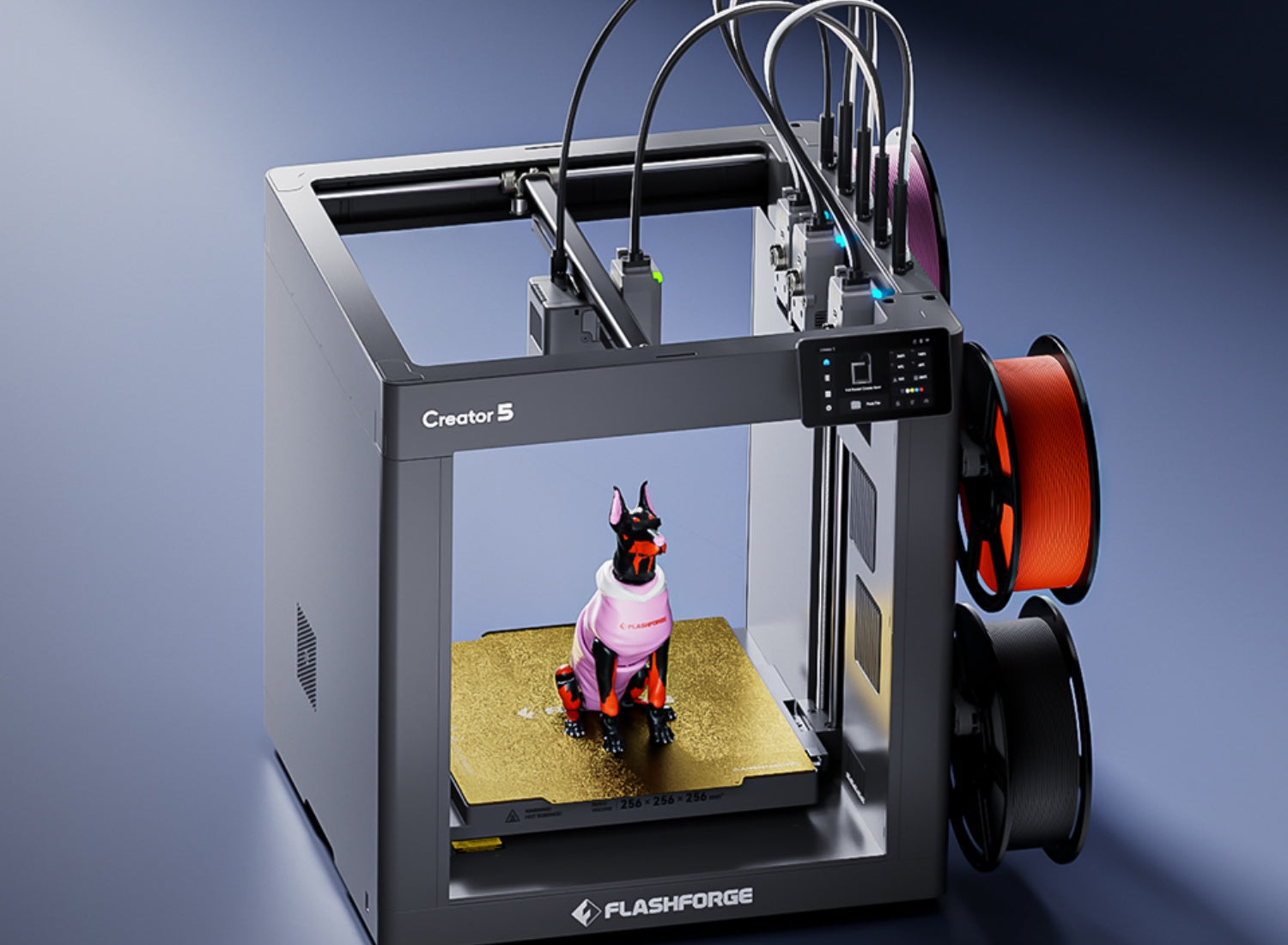
For beginners looking to turn 3D printing into a source of income, reliability and workflow efficiency matter more than chasing the highest possible speed. The Flashforge Creator 5 (C5) is designed for multi-color and multi-material printing with four independent toolheads. It provides a 256 × 256 × 256 mm build volume, automatic leveling, automatic toolhead calibration, a maximum extruder temperature of 320°C, and a removable PEI flexible steel build plate.
The four-toolhead design is useful for personalized gifts, signs, home décor items, and custom accessories. Each toolhead can handle a dedicated filament, reducing the repeated material purging required by many single-nozzle color-switching systems. This can simplify multi-color production and reduce unnecessary material waste.
The Creator 5 is also suitable for sellers who want to expand gradually. A single machine can support custom Etsy orders, local product requests, small online store listings, and selected low-volume production jobs. Remote monitoring and multi-printer management can become useful when order volume increases.
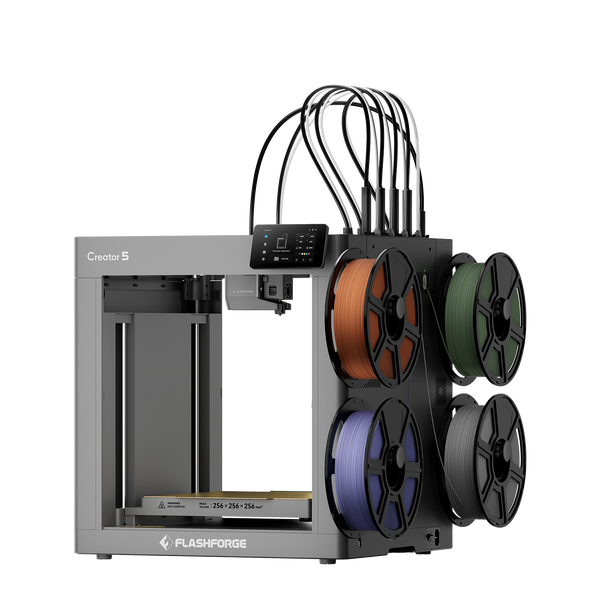
Flashforge Creator 5 4-Toolheads Multi-Color 3D Printer | 500% Faster, Zero Purge Waste
Practical 3D Printing Ideas & Business Applications
The most accessible 3D printing side hustles usually begin with products that are easy to understand and easy to personalize. Customers should be able to see the value without needing a technical explanation.
Personalized Gifts and Home Decor
Personalized products work well because they offer something that mass-produced items cannot easily provide. A customer may want a name, date, color combination, message, or design theme created specifically for an event or room.
Possible products include personalized home décor, event keepsakes, custom signs, ornaments, planters, and decorative displays.
A strong product line starts with a reusable base design. Instead of creating every order from scratch, build templates that allow you to change text, colors, or small details quickly.
For example, one nameplate design can support different names and color combinations. One ornament template can be adapted for weddings, birthdays, holidays, or family gifts.
Multi-color printing can also reduce post-processing. A product printed in the required colors may not need additional painting or assembly.
Custom Keychains, Signs, and Accessories
Small products are practical for beginners in FDM 3D printing because they use less material, print relatively quickly, and are easier to package and ship.
Possible products include custom keychains, tags, signs, badge holders, display stands, and branded promotional items.
These products also work well for local business orders. A café may need table numbers. A school club may want tags for an event. A sports team may need personalized bag labels. A small company may order branded keychains for a promotion.
Keep the customization process simple. Offer a controlled range of fonts, sizes, and colors. Too many options can make quoting and production unnecessarily complicated.
Selling Through Etsy, Shopify, and Local Marketplaces
The best platform depends on how you want to reach customers.
Etsy can help creative sellers reach shoppers looking for customized and handmade-style products. However, sellers need to follow Etsy's Creativity Standards. Etsy states that products made with computerized tools, including 3D printers, must be based on the seller's original design. Etsy also requires original photos or videos of the final product for qualifying listings.
Shopify is more suitable when you want to build your own brand and control the customer experience. You can create a focused product catalog, collect customer emails, publish educational content, and improve repeat sales over time. The trade-off is that you need to attract your own traffic.
Local marketplaces can help validate products before you invest heavily in online marketing. Consider community groups, craft fairs, local referrals, maker events, and word-of-mouth channels to test demand quickly.
A practical approach is to use local sales to test demand, Etsy to reach new customers, and a branded website to build a long-term business.
How Can You Start a Profitable 3D Printing Service Business?
A 3D printing business does not need to rely only on physical products listed online. You can also provide a service.
Service-based work often solves a specific problem. Customers may need a prototype, a replacement component, a display stand, or a short production run. They are paying for your ability to deliver a usable part without requiring them to purchase and learn how to operate a printer.

Printing Parts for Local Customers
Many customers already have a printable file but do not own a 3D printer. Others may have an idea, a broken component, or a simple sketch but need help turning it into a physical object.
Common requests include brackets, organizers, display stands, enclosures, and custom parts. These products are easier to customize in small batches. Before quoting, confirm the size, quantity, material, color, intended use, and delivery date. Ask whether the customer also needs design support.
Start with straightforward jobs. Avoid offering safety-critical parts unless you have the technical knowledge, testing process, and required approvals. Parts used in vehicles, medical applications, electrical systems, or heavy-load environments may create safety and liability risks.
Rapid Prototyping for Small Businesses
Rapid prototyping is a valuable B2B service because businesses often need to test a design before moving into larger-scale manufacturing.
A startup may need to confirm the shape of a product enclosure. A designer may want to test how several components fit together. An engineering team may need a functional sample for an internal review.
Common rapid prototyping projects include concept models, enclosures, fit-check parts, product housings, packaging samples, assembly tests, jigs and fixtures, and multi-material demonstration parts.
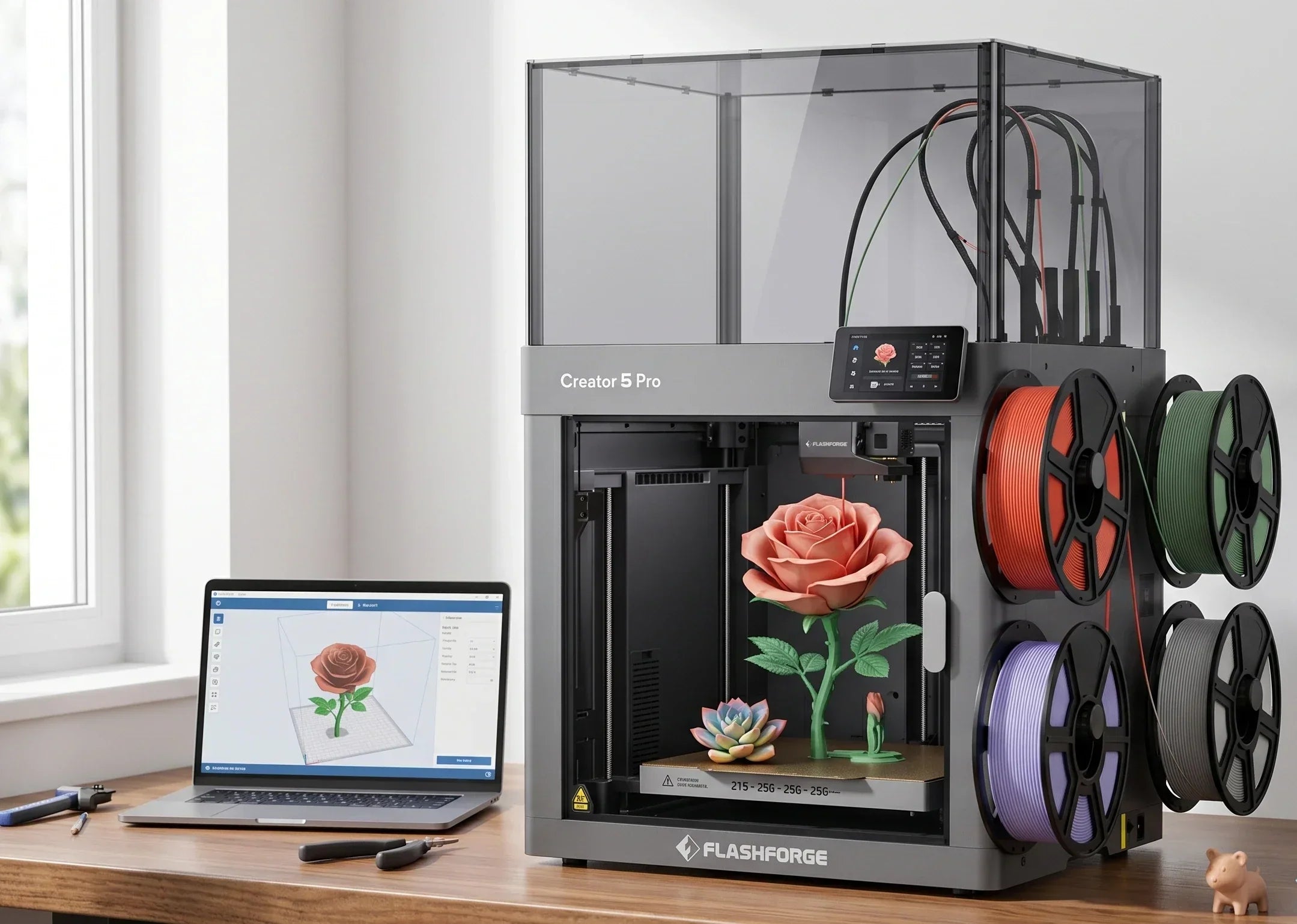
For businesses moving into professional prototype services, the Flashforge Creator 5 Pro (C5P) is designed for more demanding material workflows. It uses four independent toolheads and provides a 256 × 256 × 256 mm build volume. It also adds an enclosed structure, an active heated chamber up to 65°C, H13 HEPA and carbon filtration, and support for materials used in more advanced applications.
The Creator 5 Pro supports common filaments such as PLA, PETG, TPU, ABS, and ASA. It also supports selected engineering and fiber-reinforced materials for more demanding projects. Its enclosed structure also supports materials such as PC, PA, PC-ABS, and PPS-CF.
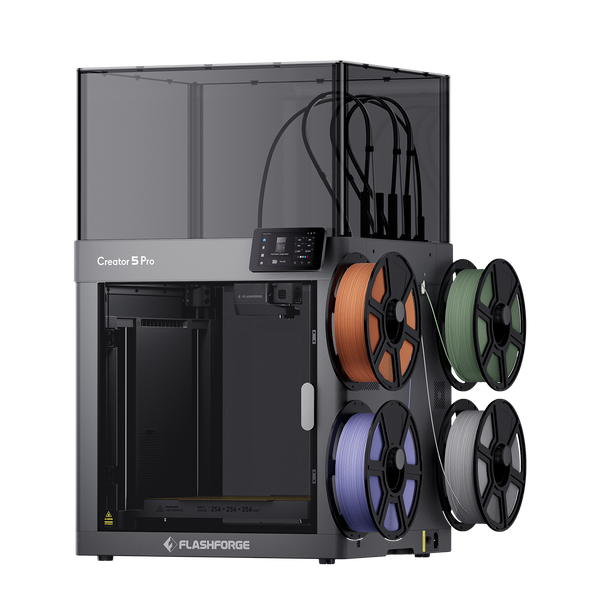
Flashforge Creator 5 Pro 4-Toolheads Enclosed Multi-Color 3D Printer | 500% Faster, Zero Purge Waste
These capabilities make it more suitable for functional prototypes, engineering samples, and professional desktop production. It does not replace every industrial manufacturing process, but it gives small teams a practical platform for testing ideas and expanding their service range.

Offering Low-Volume Manufacturing Services
Some businesses need more than one prototype but fewer parts than a traditional manufacturer wants to produce. This is where low-volume 3D printing can create value.
Suitable projects include jigs and fixtures, assembly aids, custom inserts, small-batch enclosures, display components, workshop tools, testing parts, promotional items, packaging components, and short-run accessories.
Low-volume production requires a more controlled workflow than a one-off print. A part that succeeds once may still create problems when you need to produce 20 or 50 copies.
Before accepting a batch order, confirm print time, material use, post-processing needs, quality standards, packaging, delivery schedule, material availability, backup capacity, and potential design changes. For moisture-sensitive filaments, the Flashforge VDS Filament Dry Box can also help maintain more consistent material conditions between production runs.
Repeatability matters more than maximum speed. A predictable workflow helps you quote accurately and meet deadlines.
How Can You Make Money Selling 3D Printer Files Online?
Selling physical products requires printing, packaging, and shipping. Selling digital models creates a different income stream. You design a file once, test it carefully, and offer it as a download.
Digital file sales can scale more easily because you do not need to print every order. However, the market is competitive. A useful model, clear instructions, and original design matter.
Designing STL Files for Hobbyists
STL files remain widely used in consumer 3D printing, although some creators also provide 3MF, OBJ, or CAD-compatible files depending on the project.
Possible digital products include storage organizers, planters, workshop tools, display stands, phone holders, gaming terrain, miniature accessories, customizable signs, print-in-place designs, replacement parts, and modular desk accessories.
A good digital product listing should clearly present product images, printed examples, file specifications, printing requirements, assembly guidance, licensing terms, and version information.
Always test the file before selling it. A model that looks correct on screen may still have weak walls, poor tolerances, difficult overhangs, or unnecessary supports.
Selling Digital Models on Popular Platforms
Digital products can be sold through platforms such as Etsy, MyMiniFactory, Cults3D, Thangs, and Printables. Each platform has different audiences, fee structures, and licensing options.
Check the rules before listing a product. Some platforms focus on paid downloads, while others are better suited to free files, community exposure, or commercial membership programs.
Only sell files that you created or have the legal right to distribute. The U.S. Copyright Office states that copyright protects original works of authorship once they are fixed in a tangible form of expression. Uploading or selling another creator's protected work without permission may create legal risk.
This is especially important for popular characters, branded designs, logos, and models downloaded from online libraries. A free download does not necessarily include commercial resale rights. Check the license before selling the file or a printed version.
Creating Niche Models with Less Competition
A niche model solves a specific problem for a defined audience. Generic products often compete with thousands of free alternatives. Niche products have a clearer reason to exist.
Instead of designing another basic phone stand, focus on niche products such as specialized mounts, hobby tool holders, replacement parts, modular organizers, customizable accessories, gaming storage systems, or workshop fixtures that solve specific user needs.
Niche products do not need the largest possible audience. They need the right audience and a clear use case.
What Functional 3D Printed Products Sell Best?
Functional products can sell well when they solve a clear problem. A customer may not care how complex the model is. They care whether it fits, works, and saves time.
Organization and Storage Solutions
Organization products are practical, easy to demonstrate, and suitable for homes, offices, workshops, and hobby spaces.
Possible products include drawer dividers, cable clips, desk trays, tool organizers, pegboard accessories, battery holders, label holders, wall-mounted holders, controller stands, small-parts bins, and modular storage components.
Modular designs can encourage repeat purchases. A customer may buy one organizer first and return later for extra modules.
Accurate dimensions matter. Test the product with the intended object before selling it. A difference of a few millimeters can determine whether a holder, tray, or bracket works correctly.
Replacement Parts and Repair Components
Replacement parts solve a clear problem. A component may be broken, discontinued, or difficult to source. A 3D printed version can extend the useful life of a product when the application is appropriate.
Possible products include knobs, caps, clips, spacers, feet, covers, light-duty handles, furniture components, small appliance accessories, and non-critical brackets.
Measure the original part carefully. Test the replacement before listing it. Explain the intended use clearly.
Do not claim that a printed part is suitable for high temperatures, heavy loads, food contact, electrical systems, or safety-critical applications unless you have selected the correct material and completed the necessary testing.
Practical Products for Everyday Problems
The strongest functional products usually begin with small everyday frustrations that people encounter repeatedly. Do not focus only on visual impact. Look for products that simplify daily tasks, improve organization, or fit a specific space.
When evaluating a product idea, consider questions such as:
- Does it solve a practical problem?
- Can it help organize tools, cables, or household items?
- Is it designed for a space or use case that standard products do not fit well?
- Would customization make it more useful for the customer?
In many cases, a straightforward product with a clear purpose performs better than a highly complex design with no obvious customer need.
Why Is Cosplay and Gaming a Strong 3D Printing Niche?
Cosplay and gaming communities value customization, creativity, and specialized products. These audiences are often willing to purchase products that are difficult to find through mass-market retailers.
The niche also supports multiple product sizes. A seller can begin with small accessories and later expand into larger props or modular product collections.
Intellectual-property rules still matter. The U.S. Patent and Trademark Office explains that trademarks can include words, phrases, symbols, designs, or combinations that identify goods or services. Original products are the safer long-term approach when building a business around fan communities.
Selling Props, Armor, and Accessories
Cosplay products can range from small costume details to large wearable items.
Possible products include helmets, armor components, prop details, mask parts, costume clips, wearable accessories, display stands, modular prop sections, original fantasy accessories, and costume repair components.
Large cosplay products usually involve several production stages, including splitting the model into printable sections, printing, assembly, sanding, finishing, and packaging. Because post-processing can take significant time, it is important to include finishing labor when calculating your price. In many cases, a large prop may require more labor than filament.
Custom Tabletop Gaming Miniatures
Tabletop gaming is another strong niche for 3D printing businesses because players often look for accessories that improve organization, immersion, and customization during gameplay.
Popular products include terrain pieces, dice trays, card and token organizers, miniature display stands, and modular storage systems. These items are practical for players while also allowing sellers to create themed product collections around specific gaming styles or aesthetics.
Compared with large cosplay props, tabletop gaming accessories are usually smaller and easier to print, package, and ship. They also encourage repeat purchases, since customers may return later for matching terrain sets, additional organizers, or compatible accessories.
When designing products for this market, focus on original concepts and functional designs. Avoid using protected characters, logos, artwork, or branded game assets without permission, and instead build products around general gameplay needs and unique visual themes.
Building Repeat Sales Through Fan Communities
Community-based niches work best when the product line feels connected.
A customer who buys a terrain set may want matching scenery later. A buyer who orders a dice tray may also need token storage. A customer who purchases one cosplay accessory may return for a coordinating item.
Build a focused product ecosystem rather than listing unrelated objects. A clear niche makes the store easier to understand and remember.
How Much Money Can You Make with a 3D Printer?
There is no fixed income level for a 3D printing business. Profit varies widely depending on the product, audience, platform, and production process.
A small personalized keychain business has a different cost structure from a rapid prototyping service. A digital STL store does not need shipping, but it may require more design and marketing work. A cosplay seller may charge more per item, but each order may involve significant sanding, assembly, and painting.
Calculate profit using a complete formula:
Net Profit = Sales Revenue − Material Costs − Platform Fees − Packaging − Shipping − Failed Prints − Labor − Post-Processing − Marketing Costs − Taxes
Do not price a product based only on filament cost.
Factors That Affect Profitability
Several factors affect how much money you can make:
| Factor | Why It Matters |
| Product demand | A useful or personalized product is easier to sell |
| Competition | Generic products often face stronger price pressure |
| Print time | Long prints reduce your available production capacity |
| Material cost | Specialty filaments can reduce margins |
| Failure rate | Failed prints waste material and delay orders |
| Post-processing | Sanding, painting, and assembly require labor |
| Shipping size | Large items cost more to package and ship |
| Platform fees | Marketplace charges reduce your final profit |
| Customer communication | Custom orders often require extra time |
| Repeat purchases | Returning customers reduce acquisition costs |
Track these factors for every product. A spreadsheet can help you compare listings and identify which products deserve more marketing support.
Side Hustle vs Full-Time Business Potential
A side hustle can start with one printer and a small product range. The goal is to test demand, learn the workflow, and understand your real profit margins.
As order volume grows, reliability and consistent print quality become more important than simply adding more machines. Many small businesses start with a dependable desktop printer that can handle both everyday production and occasional prototype work. For example, the Flashforge Adventurer 5M Pro combines high-speed printing, automatic leveling, and a fully enclosed design, which can help simplify day-to-day production for custom products, prototypes, and small-batch orders.
Flashforge Creator 5 4-Toolheads Multi-Color 3D Printer | 500% Faster, Zero Purge Waste
A full-time business needs more structure, including consistent print settings, maintenance routines, order tracking, quality control, and reliable delivery timelines.
Avoid buying more printers too early. Scale only when you identify a real production bottleneck.
Which 3D Printing Niches Grow the Fastest
No single niche is the fastest-growing option for every seller. Demand changes by location, platform, customer group, and season.Instead of chasing a broad trend, look for niches with four qualities:
-
A clear customer problem
-
A product that is difficult to source elsewhere
-
A repeatable production workflow
-
Enough margin to cover time, failures, and shipping
Personalized products, local B2B parts, rapid prototypes, modular storage systems, and original hobby accessories can all become profitable when they serve a defined audience.
Final Tips for Starting a Successful 3D Printing Business
A 3D printing business becomes more sustainable when you focus on repeatability. Test products carefully before adding more listings or accepting larger orders.
Focus on Solving Real Problems
Start with a customer need rather than focusing on printer features. Instead of asking “What can I print?”, ask “What problem can I solve with a printed product?” Products such as practical holders, replacement parts, prototypes, or customized accessories are valuable because they address real user needs.
Start Small and Improve Your Workflow
Begin with a narrow product range and carefully track how each product performs in real production. Pay attention to material use, print time, failure rates, post-processing requirements, packaging time, customer questions, shipping issues, and common design changes requested by buyers. Over time, these patterns will help you identify weak points in your workflow. When the same problem appears repeatedly, adjust the design or improve the production process to make future orders more efficient and consistent.
Build a Brand Instead of Selling Random Products
A focused brand is easier to market.
A store that specializes in workshop organizers can build a recognizable identity. A shop that sells unrelated toys, signs, cosplay items, brackets, and household accessories may be harder for customers to understand.
Use consistent product photos, descriptions, packaging, and customer communication.
Why Consistency Matters More Than Having Many Printers
More printers do not automatically create a better business.
One reliable FDM 3D printer can support a stronger workflow than several poorly managed machines. Scale only after you identify a real production bottleneck.
Scale after you understand your demand, production limits, and actual margins.
Conclusion
There are many ways to make money with a 3D printer. The most sustainable approach starts with a clear niche and a realistic workflow.
Begin with a small number of products or services. Test them with real customers. Track every cost. Improve the process before expanding your catalog or adding more machines.
For personalized gifts, home décor, signs, and multi-color products, the Flashforge Creator 5 provides four independent toolheads and a practical build volume for small-business workflows. For businesses expanding into professional prototypes and engineering-material applications, the Flashforge Creator 5 Pro adds an enclosed structure and active heated chamber.
The printer is important, but it is only one part of the business. The real value comes from solving a customer problem, creating original products, and delivering consistent results.
FAQ About Making Money with a 3D Printer
Can you really make money with a 3D printer?
Yes. Common business models include personalized products, custom parts, local printing services, rapid prototyping, low-volume production, and digital file sales. Profit depends on product demand, competition, pricing, and production efficiency.
What are the most profitable 3D printed products?
There is no universal answer. Products with strong potential usually solve a specific problem, support personalization, or serve a defined niche. Examples include custom signs, storage solutions, non-critical replacement parts, original gaming accessories, and B2B prototypes.
How much does it cost to start a 3D printing business?
Startup costs depend on the printer, filament, tools, software, packaging, and products you plan to sell. Beginners can start with one printer and a limited catalog. Calculate your actual margins before adding equipment.
Is selling STL files profitable?
Selling original STL files can be profitable because digital products do not require physical inventory or shipping. Strong files solve a clear problem, print reliably, include useful instructions, and come with defined license terms.
What is the best 3D printer for starting a small business?
The best printer depends on the business model. The Flashforge Creator 5 is suitable for sellers producing personalized, multi-color, and multi-material products. The Creator 5 Pro is better suited to professional prototypes, engineering materials, and more advanced service work.