









Table of Contents
Here is how it all starts. Your child sees a classmate with a 3D printed dinosaur at school, comes home, and begs you for a 3D printer. It is hard to tell which 3d printer actually suits a child and which one just uses child-friendly as a marketing gimmick. As a parent who has spent two years 3D printing alongside my child, this article will clarify what truly matters: safety, ease of use, and fun. You need all three.
3D Printing for Kids: Creativity, Safety and Parental Adoption
As 3D printing enters the home, the primary appeal for parents has shifted away from a mere toy-like experience. Data from SkyQuest indicates that the 3D Printing in Education market size is projected to grow from 1.57 billion USD in 2025 to 4.7 billion USD by 2033, with a compound annual growth rate of 14.8% from 2026 to 2033. This growth reflects a trend where parents and schools view an FDM printer as a hands-on learning tool, moving beyond simple desktop decorations.
Creativity Beyond Traditional Crafts
Traditional crafts rely mostly on paper, glue, fabric, and scissors. 3D printing turns ideas directly into physical objects. Through this process, children understand concepts like dimensions, structure, symmetry, and weight-bearing for the first time. For families, the value of this creative method lies in preserving the accomplishment of handmaking while adding the logical training of digital design. Many children start out wanting to print a small action figure, but they eventually choose to modify 3D files, adjust settings, and test connectors. This progression shows how creativity moves from a simple interest into active thinking.
Kids Now Learn Through Making
The core reason parents invest in a 3d printer for kids is its ability to transform screen time into productive creation time. Children naturally encounter spatial thinking and problem-solving while slicing, assembling, modifying 3D files, and running test prints. They engage in active learning rather than passive viewing and clicking. For educational content, this workflow upgrades traditional crafting into a more sustainable creative system.
Safer and Simpler Than Early 3D Printers
Early desktop 3D printers suffered from complicated setups, loud noise, tedious calibration, exposed hotends, and high failure rates. Today, home-oriented FDM printers show significant improvements. The home environment prioritizes:
-
Enclosed structures
-
Automatic bed leveling
-
Power loss recovery
-
Low maintenance
-
Material compatibility
These features make it easier for children to complete the entire process under parental supervision. The ideal family 3D printer delivers a successful experience on every print rather than offering an overwhelming list of complex features.
Why Parents Are Buying 3D Printers in 2026
Family buying motivations in 2026 are clear. A single 3D printer can handle family bonding, crafting, school projects, and household items all at once. Parents choose to buy not because of a specific technical specification, but because the 3D printer reduces frustration, lowers the learning curve, and keeps children motivated to find their next project. Parents purchase long-term usability value rather than a disposable toy.
Key Home-Use 3D Printer Benefits for Family Crafting
Evaluation standards for home use differ completely from factory settings. The biggest concerns at home are noise, failures, maintenance, and safety hazards, rather than slightly slower print speeds. The following factors determine whether a 3D printer can truly integrate into daily life in a living room, study, or kid's bedroom.
Safety Features Come First
For families with children, the primary requirement is keeping the hotend, moving components, and printing zone secure. Key safety features include:
-
Fully enclosed chassis
-
Automatic print pausing
-
Error protection functions
-
Visual progress tracking
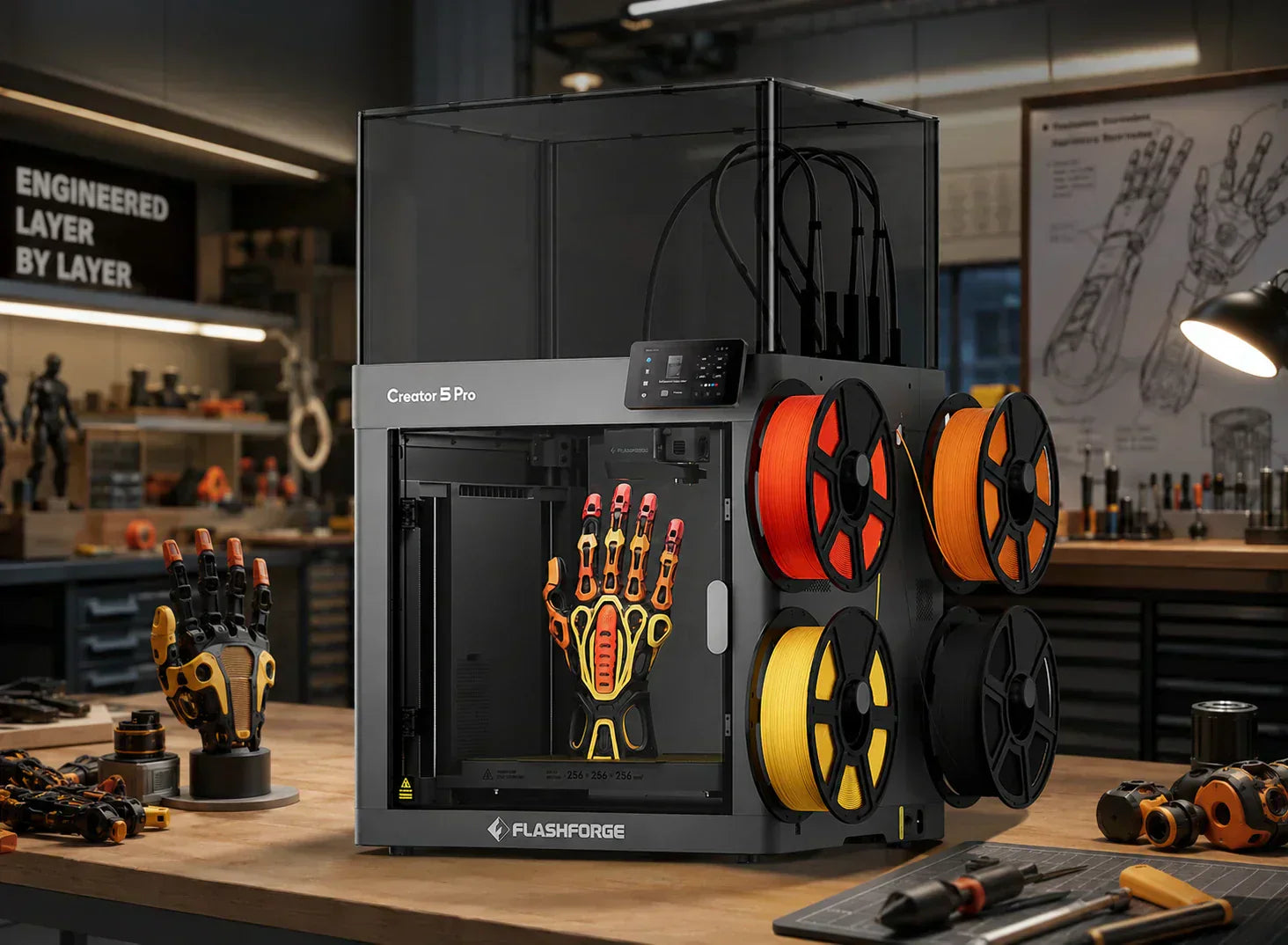
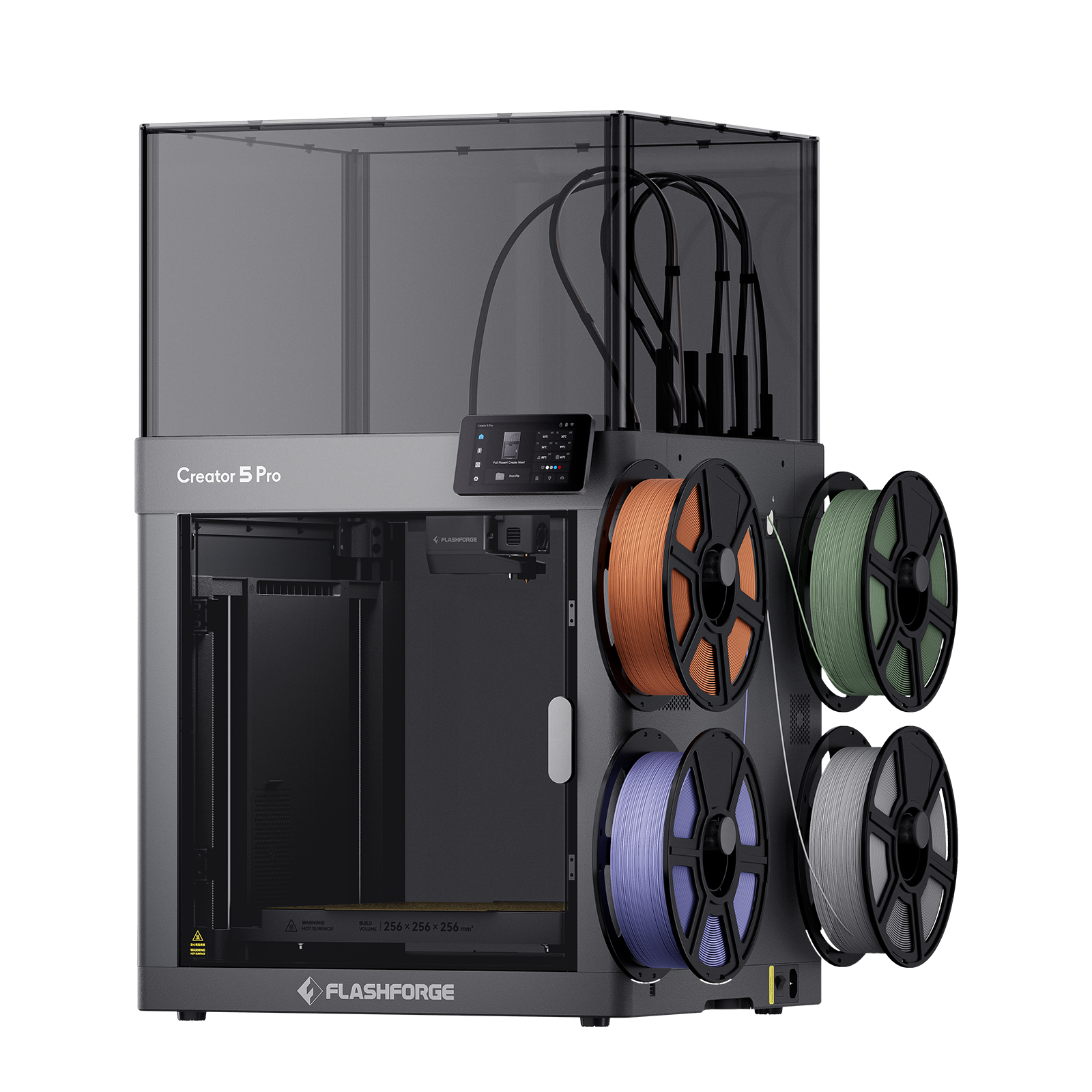
Additionally, filament selection should prioritize PLA. This material offers low odor and user-friendly operation, making it ideal for beginners and parent-child activities. If a family wants to balance safety with professional-grade results, the Flashforge Creator 5 Pro 3D Printer serves as a strong fit. Its enclosed design, automatic calibration, HEPA filtration, and multi-toolhead setup make it much safer for a home creative area than traditional open-frame 3D printers.

Quiet Printing for Home Use
In a home environment, quiet operation matters more than a flashy design. If an FDM printer creates noticeable noise, children will avoid starting it outside of weekends, and parents will naturally reduce its use. Equipment for the home must remain stable and low-disturbance during operation, running quietly in the corner like a creative household appliance.
Easy Setup and Minimal Maintenance
The real needs of parents are direct: less tuning, less leveling, fewer nozzle clogs, and less hassle. Automatic bed leveling, quick-swap nozzles, intuitive screens, and built-in preset parameters significantly reduce the chance of the 3D printer sitting unused. Home users want a repeatable, successful workflow rather than relearning the process before every single print.
Multi-Color Printing Makes Crafts More Fun
Children are naturally sensitive to colors, and multi-color 3D printing significantly increases their excitement upon project completion. This capability boosts the desire to keep printing gifts, keychains, room decorations, and character figures. The Flashforge Creator 5 series features four independent toolheads that provide true multi-color and multi-material capabilities. This design serves as a high-interest centerpiece for family creative projects, especially for households that want finished pieces to look like commercial products.
Why Reliability Matters More Than Maximum Speed
The primary concern for home users is whether the project will print successfully tonight. Top speeds are easy to exaggerate. However, if the failure rate runs high, supports prove hard to remove, or layer lines look rough, a child's interest drops quickly. Stable output, high success rates, and consistent repeatability are the true core benchmarks for home 3D printing.
Best Home 3D Printers for Kids and Creative Projects in 2026
When choosing a 3D printer for the home, focus on family-centric needs rather than technical specifications alone. A 3D printer that truly suits children and home use must cover five key requirements:
-
Beginner-friendly onboarding
-
Adequate build volume
-
Creative flexibility
-
Multi-color capabilities
-
Educational value
If your main goal is getting the whole family up and running quickly, prioritize automatic bed leveling, intuitive user interfaces, and high fault tolerance. For users who view 3D printing as a long-term family hobby, the best choice is an fdm 3d printer that delivers stable output without turning parents into full-time repair technicians. The Flashforge Creator 5 Pro stands out in these scenarios. With its four independent toolheads, multi-material compatibility, and high level of automation, it fits families who know their creative print frequency will continue to grow over time.
Fun Things Kids and Families Can Actually Print
The most sustainable content for families to 3D print usually consists of small items that carry emotional value, see high usage, and deliver a strong sense of achievement, rather than complex setups. When projects remain short and results stay visual, children willingly try again.
Toys, Figures, and Board Game Accessories
These items spark interest easily because children immediately see their favorite characters and board game components turn into physical objects. Home users frequently start here before transitioning into original designs. This path guides them naturally from interest-driven activities to independent creation.
DIY Craft Decorations and Gifts
Holiday decorations, small gifts, birthday plaques, and name tags fit home 3D printing well. They share clear purposes, strong presentation value, and build the proud feeling of I made this within the family. These projects fulfill seasonal demands and offer a personalized touch.
School Projects and STEM Models
School assignments represent a major application for home 3D printing, especially for geography shapes, scaled architecture, scientific structures, and mechanical demonstrators. Brining a self-printed physical object to class boosts a child's engagement and helps them grasp abstract knowledge. A finished physical project leaves a much stronger memory than standard homework.
Personalized Keychains and Room Decor
Personalized items are ideal for parent-child co-creation due to low production costs, minimal failure risks, and fast results. High-frequency 3D prints include:
-
Name plaques
-
Door signs
-
Desk organizers
-
Hanging ornaments
This category lowers the barrier to entry while delivering high satisfaction.
Simple Functional Items for Everyday Use
Small fixes and tools often convince parents of the ongoing utility of a 3D printer. Items like cable clips, storage organizers, stands, and hooks look ordinary but prove the purchase value of the equipment. This utility provides a practical reason to buy.
Common Pitfalls of Kid‑Friendly 3D Printing
Child-friendly design does not mean a hands-off operation. Explaining risks clearly improves trust, as parents value realistic, manageable safety boundaries.
3D Printing Still Requires Supervision
A 3D printer involves hotends, moving parts, and material handling. Children can participate, but parents should manage starting the job, removing parts, and changing filaments. An ideal workflow ensures children can engage while parents remain worry-free.
Cheap Printers Often Create Frustration
Low-priced equipment often introduces high hidden costs, including repeated failures, required manual calibrations, and short component lifespans. Children tolerate frustration poorly. When consecutive prints fail, their interest drops rapidly. Families must prioritize total experience quality over initial pricing.
Filament Costs Add Up Over Time
Many buyers only calculate the price of the FDM printer, overlooking filaments, replacement nozzles, build plates, and design subscriptions. If a child 3D prints frequently, materials become an ongoing expense. Your actual budget is the annual running cost rather than just the initial down payment.
Print Failures Are Part of the Learning Process
Failures provide opportunities for tuning, observation, and correction. The equipment must remain stable enough so that failures serve as occasional learning moments rather than the baseline experience.
Not Every Printer Is Truly Kid-Friendly
Some equipment presents impressive specifications but uses an operational logic that fails at home. True child-friendliness depends on onboarding simplicity, low maintenance, and long-term home storage stability rather than marketing slogans. This factor serves as a critical filter for buyers.
Educational & Future‑Focused Family 3D Printing Trends
The next phase of home 3D printing looks like a family maker education platform rather than a standalone tool. AI assistance, shared file libraries, automatic slicing, and one-click execution will continue lowering entry barriers, allowing children to focus entirely on creation.
Turning Screen Time Into Hands-On Creation
Parental anxiety over screen time continues to drive the demand for turning digital experiences into tangible creations. 3D printing keeps children engaged with digital interests while guiding them toward physical results, acting as an educational asset rather than a pure entertainment box.
Encouraging Design Thinking at an Early Age
Design thinking starts when a child asks why a part broke or how to make it stronger. 3D printing introduces a continuous process of testing hypotheses rather than a one-time activity. This problem-solving ability benefits learning, hands-on skills, and self-expression.
Why Schools Are Adopting Desktop 3D Printers
Schools favor desktop FDM printers because they turn abstract concepts into touchable, displayable achievements. Home use follows a similar goal, allowing children to convert understanding into physical output. This shared approach expands the acceptance of 3D printing at home.
Smarter slicing, material recognition, and template recommendations will continue to lower entry barriers. Future home users will achieve high-quality results without needing engineering training, turning complex technology into an easy home experience.
Conclusion
A 3D printer gives a child far more than a few plastic trinkets on a desk. It teaches a mindset for addressing problems. Instead of complaining, they think about whether they can design a solution themselves. A backpack buckle breaks, so they print a new one. They dislike a pencil holder, so they design an original alternative. This shift from a consumer to a creator is a meaningful gift. Your role is simply to help them select a safe, reliable FDM printer, then step back and watch them create. For those focusing on creativity, education, and family co-creation, the Flashforge Creator 5 series is well-suited to serve as the core tool for turning ideas into finished work, transforming an initial trial into a long-term interest.