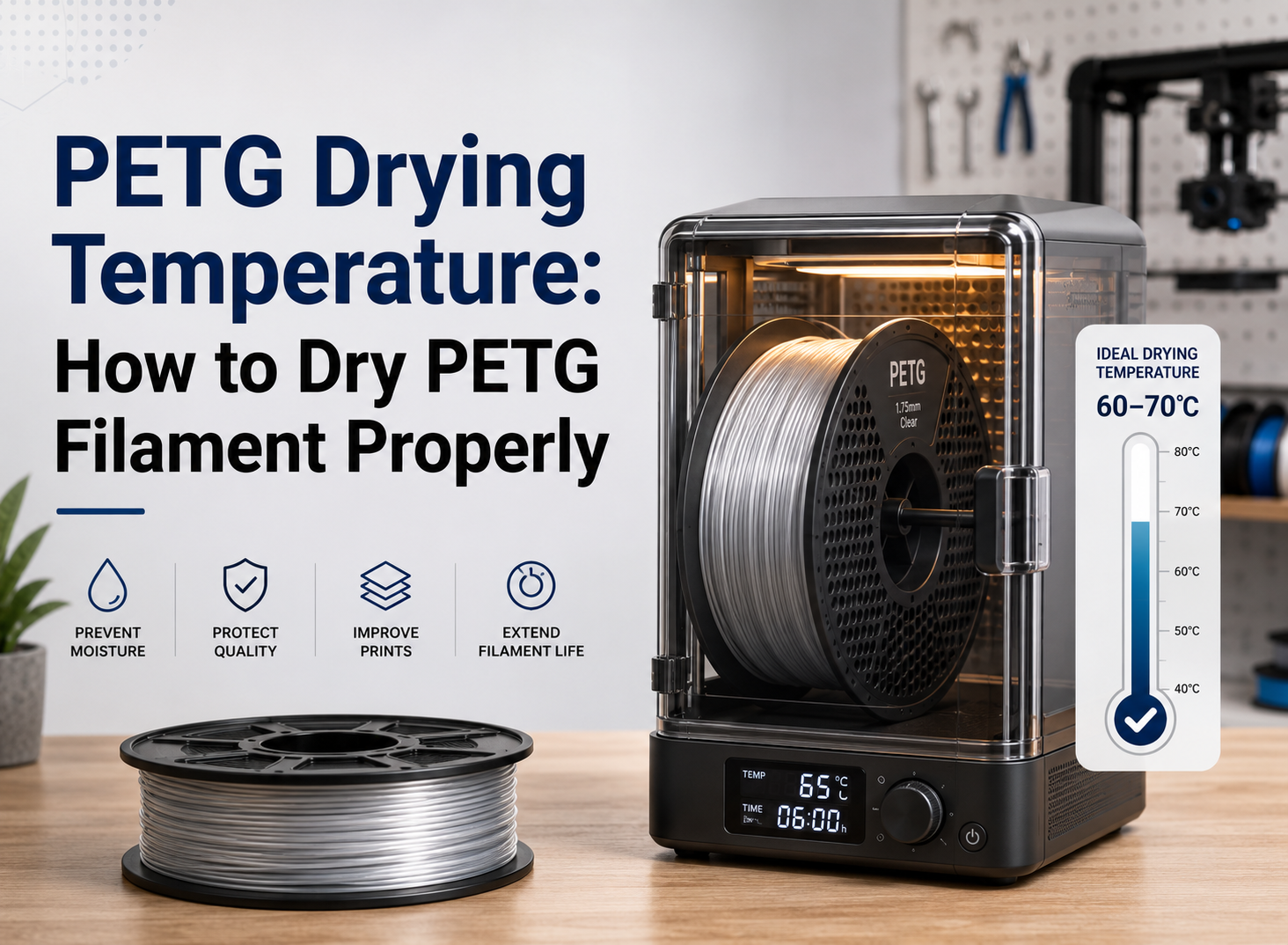



3D printer filament can absorb moisture from the air even when it looks dry. Over time, this can lead to popping sounds, stringing, rough surfaces, weak layer bonding, and brittle parts. Proper storage helps protect print quality, reduce failed prints, and extend the usable life of each spool.
The right setup depends on the filament type, local humidity, number of spools, and budget. Some users only need sealed bags with desiccant. Others may need airtight boxes, heated filament dryers, multi-spool drying systems, or professional drying cabinets for moisture-sensitive materials.
Why Proper Filament Storage Matters
In fdm 3d printing, filament storage is not only about keeping spools neat. It directly affects extrusion consistency, surface quality, layer bonding, and whether a print finishes successfully.
Moisture Absorption in 3D Printer Filament
Many thermoplastic filaments are hygroscopic, which means they can absorb moisture from the surrounding air. The effect may not be visible at first. A spool can look clean and dry but still contain enough moisture to affect extrusion.
When wet filament enters a hot nozzle, moisture turns into steam. That can create small bubbles, uneven flow, popping sounds, and rough surface texture. Flashforge’s article on filament dryness and humidity explains how damp filament can lead to bubbles, cracks, poor layer adhesion, and visibly worse print surfaces.
Filaments Most Vulnerable to Moisture
Not all materials absorb moisture at the same speed. PLA and ABS may still benefit from dry storage, but they are usually less demanding than nylon, TPU, PVA, or BVOH. PETG sits somewhere in the middle: it is easier to manage than nylon but can still develop stringing, bubbles, and weaker layers if stored poorly.
Moisture-sensitive materials include nylon and PA-based composites, TPU and other flexible materials, PVA and BVOH support filaments, PETG and PET-based materials, and carbon fiber or glass fiber reinforced blends.
For users comparing material options, Flashforge’s 3D printer filament types guide is a useful reference because material choice affects not only strength and surface finish, but also storage and drying needs.
Common Signs of Wet Filament
Wet filament often shows itself during printing rather than on the spool. The most common signs include popping or crackling sounds from the nozzle, visible steam or bubbles, extra stringing, rough surfaces, inconsistent extrusion, weak layer bonding, and brittle printed parts.
Do not assume every print defect is caused by moisture. Wrong nozzle temperature, poor retraction, weak cooling, dirty build plates, and clogged nozzles can create similar symptoms. However, if a spool printed well before and now suddenly produces stringing, popping, or rough surfaces after open-air storage, moisture is a likely cause.
Effects of Wet Filament on Print Quality and Strength
Moisture can damage both appearance and mechanical performance. Decorative models may show blobs, surface scars, stringing, and uneven color. Functional parts may lose layer strength, become brittle, or fail under load sooner than expected.
The cost is not just one bad print. Wet filament can waste hours of machine time, increase cleanup, and lead to repeated failed prints while the user tries to fix slicer settings that were not the real problem. Dry storage prevents many of these issues before they start.
How to Control Humidity for Filament Storage
A good filament storage setup has three goals: limit air exposure, keep humidity low, and make it easy to monitor the storage environment.

Ideal Humidity Levels for Filament Storage
For most opened spools, aim for a consistently low-humidity environment. Many users target about 20% RH or lower for opened filament, especially for materials that will not be used immediately.
A regular room may feel comfortable to people but still be too humid for filament. Basements, garages, laundry rooms, coastal areas, and rainy seasons can increase moisture exposure. If your local humidity is high, sealed storage becomes more important.
Moisture-Control Levels for Different Filaments
Different materials absorb moisture at different speeds, so storage should not be one-size-fits-all. When choosing 3d printer filament, compare not only strength, heat resistance, and surface finish, but also moisture sensitivity.
PLA and PETG usually do well in sealed bags or airtight boxes with fresh desiccant. TPU, nylon, and water-soluble support materials often need stricter low-humidity storage or active drying. PVA and BVOH should be treated carefully because support materials can degrade quickly when exposed to humid air.
A simple rule works well: the more expensive, flexible, water-soluble, or engineering-focused the filament is, the more carefully it should be stored.
Hygrometer Placement and Humidity Monitoring
A hygrometer tells you whether your storage setup is actually working. Place it inside the sealed box or dry cabinet, not outside the container. If the box holds several spools, keep the hygrometer where it can be seen easily without opening the lid for too long.
Do not rely on one reading immediately after closing the box. Give the container time to stabilize. If humidity drops after adding desiccant and stays low, the seal is probably working. If humidity rises quickly, the lid, gasket, cable port, or filament outlet may be leaking air.
Desiccant Selection, Placement, and Regeneration
Silica gel is the most common desiccant for filament storage. It is affordable, reusable, and easy to place inside dry boxes or sealed bags. Indicating silica gel is especially helpful because it changes color when saturated, reminding you when it needs regeneration.
Place desiccant where air can circulate around it. A small breathable container, mesh bag, or printed desiccant box works better than burying packets under spools. Regenerate reusable desiccant according to the supplier’s instructions, and do it before the material becomes fully saturated.
Filament Storage Solutions by Budget
Filament storage can be simple or advanced. The right choice depends on how many spools you own, how often you print, and how sensitive your materials are.
| Budget | Storage Solution | Best For | Main Limitation |
| Under $20 | Sealed bags with desiccant | A few occasionally used spools | No active drying |
| $20 to $60 | Airtight storage box with hygrometer | Several everyday filament spools | Requires manual humidity checks |
| $60 to $150 | Filament dryer | Frequently used or moisture-sensitive filament | Usually holds only one or two spools |
| $150 to $300 | Multi-spool drying system | Multi-color and multi-material printing | Takes up more space |
| Over $300 | Professional drying cabinet | Studios, labs, and print farms | High upfront cost |
A sealed bag is enough for a beginner with one or two PLA spools. A dry box is better once you keep several opened spools. A heated dryer makes sense if you often print TPU, PETG, nylon, or support materials. Print farms and studios may need a larger drying cabinet because filament downtime becomes production downtime.If you are upgrading more than storage, compare the materials you plan to use before choosing a 3d printer for sale. A printer, dryer, dry box, and filament setup should work together instead of being chosen separately.A sealed bag is enough for a beginner with one or two PLA spools. A dry box is better once you keep several opened spools. A heated dryer makes sense if you often print TPU, PETG, nylon, or support materials. Print farms, studios, and Creator 5 Series users may benefit from a multi-spool drying system because filament downtime becomes production downtime.
How to Build a Filament Storage System
A DIY filament storage system does not need to be complicated. The goal is to keep spools dry while allowing smooth feeding into the printer.
Step 1: Choose the Container and Capacity
Start by counting how many spools you need to store. If you use one or two materials, sealed bags may be enough. If you switch colors often, an airtight storage box with room for multiple spools is easier.Choose a container with a gasketed lid and enough height for full-size spools. Leave space for desiccant, a hygrometer, and spool holders. Avoid containers that flex too much because the seal may loosen over time.The best 3d printer setup is not only about the machine itself. It should also include a storage plan that matches the materials you print most often, especially if you keep several opened spools near the printer.
Step 2: Add Spool Holders and Feed-Through Ports
Spool holders should rotate smoothly, and the filament outlet should sit close to the spool path. A poor layout can create friction, sharp bends, or tangled filament. Seal the outlet as much as possible to reduce moisture entering the box.When building a dry box around AD5X use, spool position matters because the filament path should stay clean and consistent. The AD5X Filament Spool Holder is designed to hold the filament spool and includes a reverse rewinding mechanism to help reduce tangling during loading and unloading. This makes it easier to align the spool holder, outlet, and guide tube into a smoother feed path.
Step 3: Install Seals, a Hygrometer, and Desiccant
Once the spool holders are in place, install the sealing components. Check the lid gasket, feed-through ports, tube openings, and any holes made for hardware. Even a small gap can allow humid air to enter over time.Place the hygrometer inside the container where you can read it easily. Then add desiccant in a breathable holder. Do not let loose beads scatter inside the box because they can interfere with spool movement or end up near the filament path.
Step 4: Test the Seal and Filament Feed
Before trusting the box with expensive filament, test it. Close the container, record the humidity, and check again after several hours. A good setup should show humidity dropping and then staying relatively stable.Next, test the filament feed. Pull filament through the outlet by hand and check for resistance. If the spool jerks, binds, or pulls at a sharp angle, adjust the holder position or guide tube. A dry box should protect filament without creating feeding problems.
How to Manage Filament for Long-Term Storage
Long-term filament care is about habits. Even a good storage box will not help much if spools are left open for days or returned without drying.
Dry Opened Filament Before Storage
If a spool has been open for a long time, dry it before sealing it away. Storage prevents new moisture from entering, but it may not remove moisture already inside the filament. This is especially important for TPU, nylon, PVA, BVOH, PETG, and fiber-filled materials.Drying temperature and time depend on the material, so follow the filament supplier’s recommendation. Too little heat may not remove enough moisture, while too much heat can deform the spool or damage the filament.
Group Spools by Material and Moisture Risk
Store similar materials together when possible. PLA and PETG can share a general dry box. Nylon, TPU, and water-soluble support materials should be kept in a stricter low-humidity setup.Grouping spools also reduces mistakes. If you know one box contains moisture-sensitive materials, you are more likely to monitor it carefully and regenerate desiccant on time.
Label Each Spool and Track Storage Dates
A simple label can prevent confusion later. Mark the material, color, brand, nozzle recommendation, opening date, drying date, and any print notes.This is especially useful for small studios, schools, and print farms. A spool may look normal, but a label can tell you whether it has been open for two days or six months.
Use Older Spools First
Use older opened spools before new ones. This reduces the chance of forgotten filament sitting for months and absorbing moisture through repeated exposure.For large collections, arrange spools by opening date or use a simple first-in, first-out system. Keep rare or expensive materials in the best storage conditions.
Inspect Filament Before Printing
Before printing, check the filament surface and flexibility. Brittle sections, surface roughness, dust, or unusual snapping can signal age, moisture, or poor storage.For important prints, run a small test before starting a long job. Listen for popping sounds and watch for stringing, bubbles, or inconsistent extrusion. If the print looks wrong, dry the filament before changing too many slicer settings.This matters even more when using a high speed 3d printer, because inconsistent extrusion, moisture bubbles, and brittle filament can become more visible at faster print speeds or during long multi-color jobs.
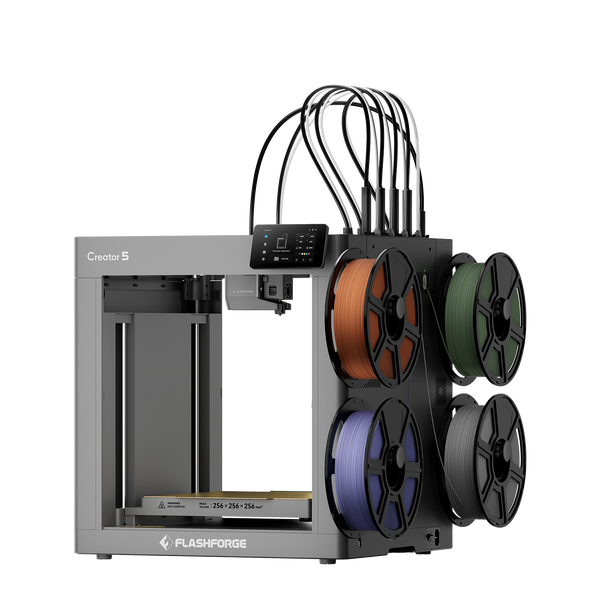
Flashforge Creator 5 4-Toolheads Multi-Color 3D Printer | 500% Faster, Zero Purge Waste
Conclusion
Proper filament storage protects print quality, reduces failed prints, and extends the useful life of each spool. The best system depends on your materials, climate, number of spools, and printing habits.For basic PLA printing, sealed bags and desiccant may be enough. For PETG, TPU, nylon, PVA, BVOH, and engineering materials, use a more controlled setup with a dry box, hygrometer, active dryer, or drying cabinet. The most reliable workflow is simple: dry wet filament, seal it quickly, monitor humidity, regenerate desiccant, and keep the filament path smooth from storage to printer.
FAQ
Can You Leave Filament Loaded in a 3D Printer Overnight?
Yes, you can usually leave filament loaded overnight if the room is dry and the material is not highly moisture-sensitive. PLA and PETG are often fine for short periods. TPU, nylon, PVA, and BVOH should not be left exposed longer than necessary. If the printer will sit unused for days, unload the filament and store it in a sealed dry box or bag with desiccant.
Can Different Filament Types Share the Same Dry Box?
Yes, different filament types can share the same dry box if they have similar storage needs. PLA and PETG can usually share a general dry box. Nylon, TPU, PVA, and BVOH are better kept in a lower-humidity setup because they absorb moisture more easily. Avoid opening the same box too often if it contains moisture-sensitive materials.
How Should You Store Filament When Using the Flashforge AD5X?
For AD5X workflows, keep active spools dry and make sure the filament path feeds smoothly. Store unused spools in sealed bags or a dry box with desiccant. If you build a dry box, align the spool holder, feed-through port, and guide tube to reduce resistance. The AD5X spool holder design helps manage spool placement and reduce tangling during filament loading and unloading.
Does 3D Printer Filament Expire?
3D printer filament does not usually expire on a fixed date, but it can become harder to print if it absorbs moisture, becomes brittle, collects dust, or degrades from heat and sunlight. Proper storage can keep many spools usable for a long time. Always inspect older filament before starting an important print.
Why Is Filament Still Brittle After Drying?
Filament may stay brittle after drying if it has aged, degraded, absorbed moisture for too long, or been exposed to heat, UV light, or poor storage conditions. Drying removes moisture, but it cannot always reverse chemical degradation or mechanical damage. If the filament snaps easily after drying, use it only for low-risk prints or replace the spool.