











Table of Contents
3D printers are becoming essential learning tools in homes and schools. They help develop a child's creativity, scientific thinking, and future career competitiveness. In this article, we look at the latest industry research, real-world cases from families and schools, and the key factors you care about most: safety, ease of use, and buying tips. This guide will help you decide if now is the right time to get a 3D printer for your child and how to choose a machine that actually fits their needs.
Why 3D Printers Are Becoming Essential Learning Tools for Kids
Today, 3D printing is becoming a fundamental tool for children to turn their ideas into physical objects in more elementary schools, middle schools, and even living rooms across the globe.
Growth of STEM and Hands-On Learning
The global education sector is shifting from traditional lectures to learning by doing, with a focus on STEM/STEAM and project-based learning. This shift has opened the door for 3D printing in the classroom. By 2025, the global 3D printing market in education reached approximately 402.7 million dollars. It is expected to grow to about 856.7 million dollars by 2034, with a compound annual growth rate of 8.49 percent between 2026 and 2034. This growth is driven by schools investing in STEM and personalized learning.
On a practical level, when primary and middle schools integrate 3D printing into science classes, engineering projects, and interdisciplinary activities, students show significant gains. They improve in understanding abstract concepts, spatial reasoning, and overall learning motivation. For example, a study of primary schools in the UAE showed that students who regularly engaged in 3D printing activities had a much higher interest in STEM careers and a stronger sense of self-efficacy. This suggests that children are more likely to connect their future studies with technology and engineering professions.
Role of Creative Technology in Education
The unique thing about 3D printing is how it bridges the digital and physical worlds. It allows children to design in software and then hold their physical creations in their hands. This experience is difficult to replace with just pens, paper, or tablet apps. In a 3D printing project, children go through a full cycle of brainstorming, modeling, printing, testing, and refining. This process significantly improves their self-awareness regarding creativity and problem-solving skills.
Increasing Accessibility of Kid-Friendly 3D Printers
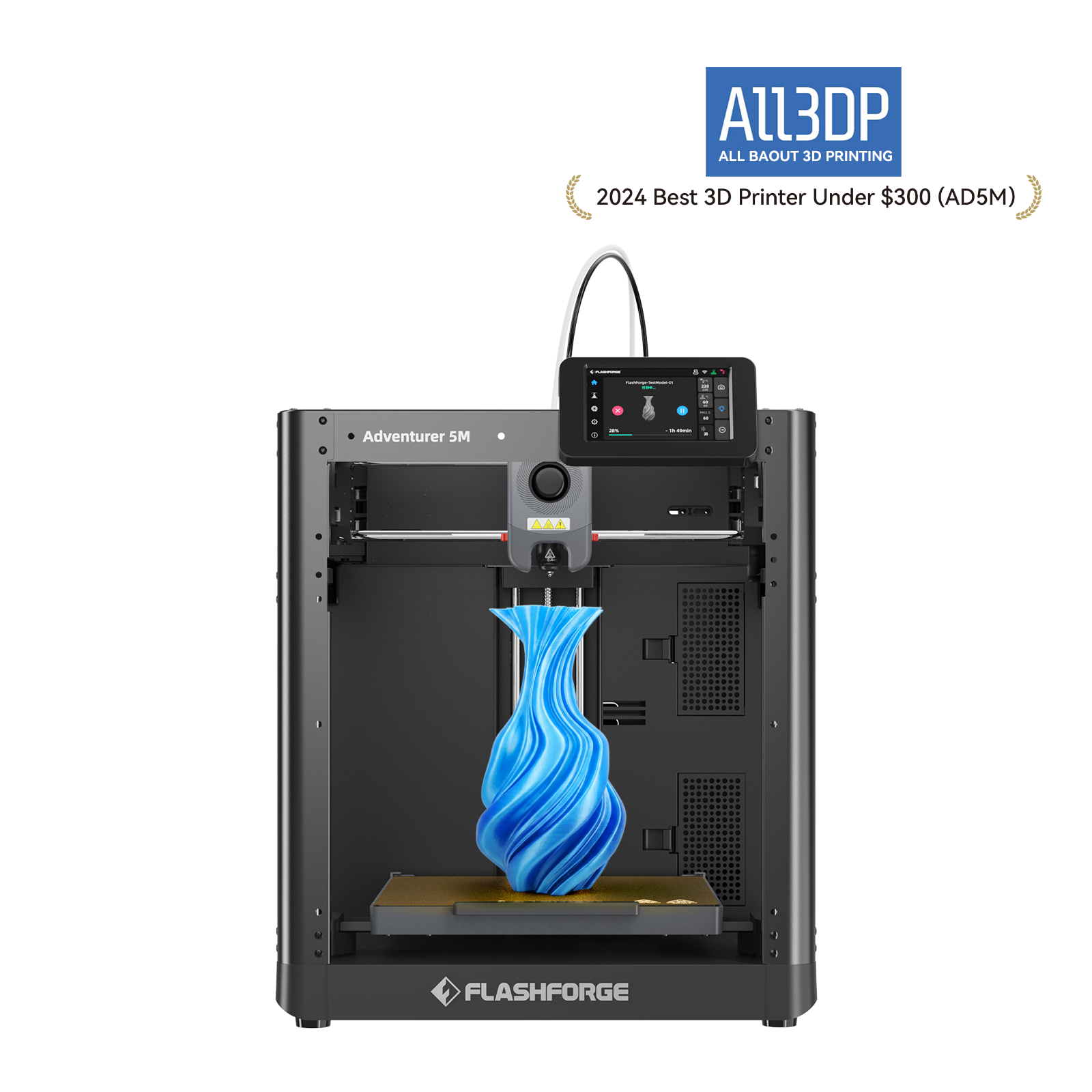
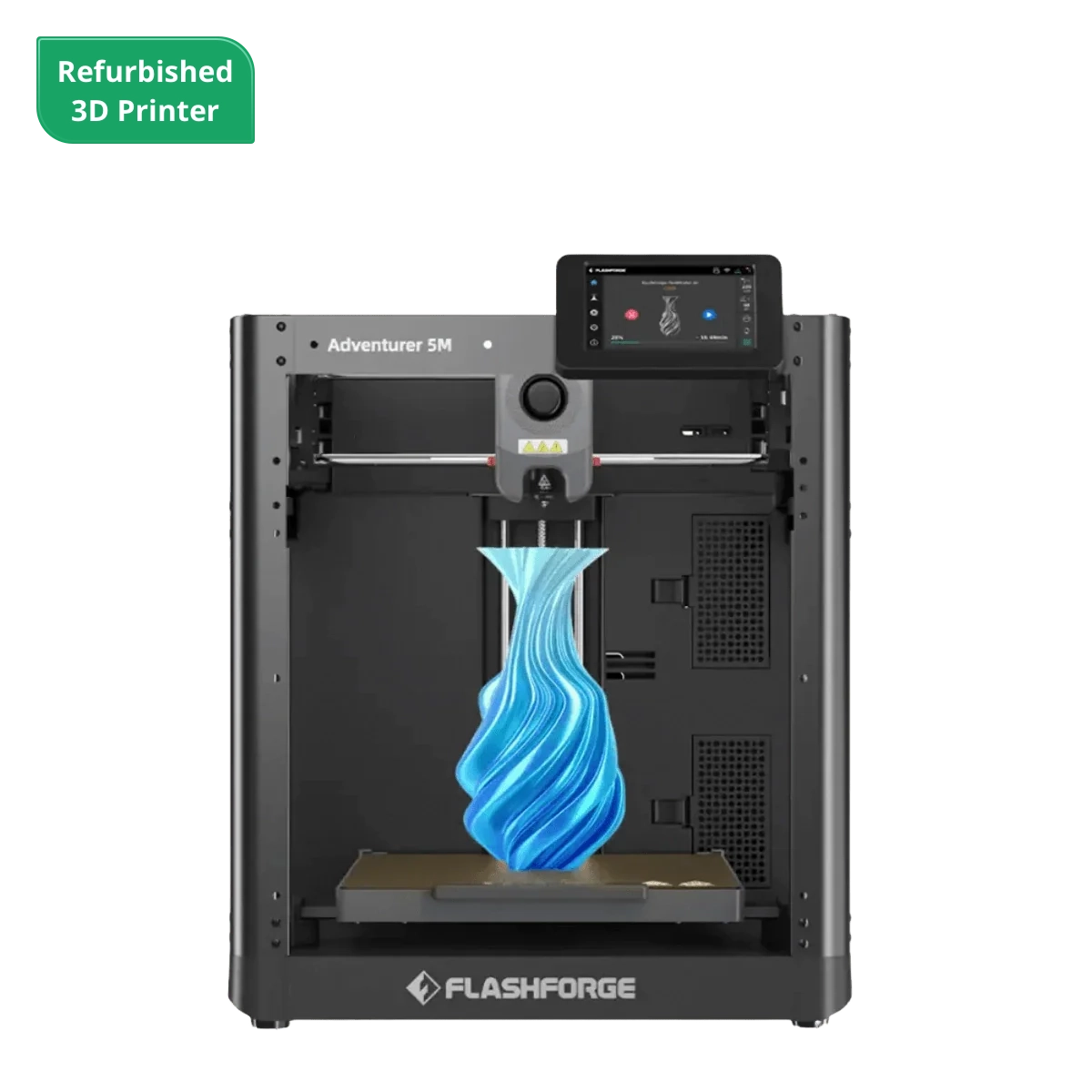
A few years ago, a 3D printer was bulky, expensive, and complex to set up, making it hard to bring into the average home. Today, the price of desktop 3D printers for beginners and educational settings has dropped to a range that most families can afford. Modern features like auto-leveling, one-click printing, and preset material parameters have also lowered the barrier to entry. For example, the Flashforge Adventurer 5M series is ideal for beginners and families. It can be set up in under 10 minutes and requires no prior experience to start printing. With a build volume of 220x220x220 mm, it offers enough space for most school projects and creative works. These products take the burden of hardware troubleshooting off the shoulders of parents and teachers. This allows everyone to focus more on design and learning rather than mechanical adjustments.
10 Benefits of 3D Printers for Kids
We will break down these ten dimensions of value using research data and real-world cases.
-
Enhancing Creativity and Imagination
In 3D printing projects, students move from following instructions to thinking for themselves. They must actively conceive shapes, functions, and structures. This naturally sparks imagination. For example, some elementary school curriculums ask students to design a magic prop for their favorite story character. A child must first build the purpose and appearance of the prop in their mind. Then, they learn to use modeling software to express that idea. For younger children or those just starting to explore three-dimensional art, a 3D printing pen for kids vs kids 3D printer comparison can help parents decide which tool best supports these early creative stages. Finally, they print it into a physical object. This process expands a child's understanding of what they can achieve. This experience of making something new strengthens their creative identity. For home users, a stable and easy-to-use 3D printer acts like a mini-maker factory. Children can turn their ideas into desk-side creations at any time.
-
Improving Problem-Solving Skills
3D printing is essentially a process of trial, error, and iteration. This gives children real-world practice in solving problems. Failed prints, incorrect part sizes, or unstable structures are concrete issues they must face. These challenges push children to analyze causes and adjust models or print parameters rather than simply giving up. In the classroom, 3D printing activities encourage group discussions about what went wrong and how to improve. Collaborative problem-solving around a physical object builds critical thinking and communication skills better than paper-based exercises. Practicing the cycle of identifying problems, forming hypotheses, testing, and optimizing in a low-risk environment builds a comprehensive literacy highly valued in the future workplace.

-
Supporting STEM Education Development
Educational research shows that 3D printing fits STEM perfectly because it breaks down abstract concepts into objects students can handle. For instance, students can print gear sets to learn about the transmission of force and motion. They can print bridge structures to verify load-bearing differences. They can even print molecular models to understand chemical bonds and spatial arrangements. These hands-on activities significantly deepen their understanding of academic subjects.
-
Encouraging Hands-On Learning Experiences
Traditional classrooms often focus on watching and listening. 3D printing brings children into the making phase. This hands-on experience improves engagement and helps students transfer what they learn to other areas. When students operate the equipment, observe the printing process, and adjust models, they remember the knowledge longer. They also become more willing to apply what they have learned in daily life. Because of this, many schools are adding desktop 3D printers to STEM labs and libraries. Reports indicate that over half of middle and high schools in the US have integrated 3D printing into their tech or science curricula to support inquiry-based learning. Bringing an easy-to-use, safe 3D printer into your home extends this hands-on learning model into everyday life.
-
Building Confidence Through Creation
When a child picks up an object that grew out of their own computer for the first time, the sense of achievement builds their self-confidence. In research interviews, many students mentioned that completing a 3D print made them feel like engineers or inventors. This makes them more willing to challenge harder tasks. This I can do it experience is vital for children who may be introverted or lack confidence in traditional subjects.
A real story from Canada illustrates this point well. Krista Ryan, a 48-year-old mother, bought a Flashforge Creator Pro 2 to help her autistic son overcome his fear of using the bathroom. She taught herself modelling and printing. Following an occupational therapist's advice, she designed and printed a mini toilet that matched her son's favorite animation character. This turned potty training into a game. Each time they went to the bathroom, the toy sat on the 3D-printed toilet first. While the child did not operate the printer directly, he watched the process closely and even helped close the printer door. He began to form positive associations with the bathroom, and his resistance dropped. Krista later began designing custom puzzles and reward toys. 3D printing improved their daily lives and boosted her confidence in her ability to help her son.
-
Introducing Basic Engineering Concepts
3D printing projects naturally include engineering thinking. Concepts like structural stability, material selection, tolerances, and stress distribution become tangible. These terms, usually reserved for college engineering courses, become real through toys, brackets, and small gadgets. Researchers note that even simple elementary projects help students experience the basic cycle of engineering design. They begin to ask why a part broke or why a bridge collapsed, and if thickening a section would make it stronger.
-
Developing Patience and Focus
The slow nature of 3D printing provides educational value. Printing a medium-sized model can take hours. Children must learn to wait. They maintain an interest in the results and observe details during the process. This is excellent training for attention spans and delayed gratification. Some teachers have noted that students who usually struggle to sit still will quietly observe, record, and photograph their parts as they grow. From a parent's perspective, 3D printing offers a gentle way to train focus. It does not carry the pressure of tests or homework. Instead, the quality of the final object provides natural feedback on whether the child was focused enough.

-
Enabling Personalized Learning Projects
One of the greatest advantages of 3D printing is high customization. Children can create unique models for historical buildings, geographic terrains, or literary story scenes based on their interests. This connects academic content with personal hobbies and boosts learning motivation. Beyond schoolwork, many children find joy in creating their own customized playthings. Learning how to make toys with 3D printers for toys allows them to design unique action figures or puzzle pieces that reflect their specific interests. For children with special learning needs, personalization is even more critical. Krista used 3D printing to turn high-pressure training into a manageable game. Similarly, parents can print tactile letter boards, counters, or visual time-management tools that are often hard to find in stores.
-
Strengthening Digital Design Skills
To use 3D printing well, children must master the spatial translation from a 2D screen to a 3D object. This builds digital design and spatial thinking skills. Many schools introduce basic CAD modeling in 3D printing courses. Students learn operations like extrusion, rotation, and Boolean logic. These skills are highly relevant to future careers in industrial design, architecture, animation, and game development.
-
Preparing Kids for Future Careers
From a broad perspective, 3D printing represents advanced manufacturing and digital production. It is used in medicine, aerospace, automotive, and consumer electronics. The World Economic Forum Future of Jobs 2023 report notes that about a quarter of jobs will undergo significant changes in the next five years. Companies emphasize the need for talent with digital literacy, creative problem-solving skills, and technical understanding. Giving a child a 3D printer satisfies their curiosity and builds a non-textbook foundation for understanding industry and technology.
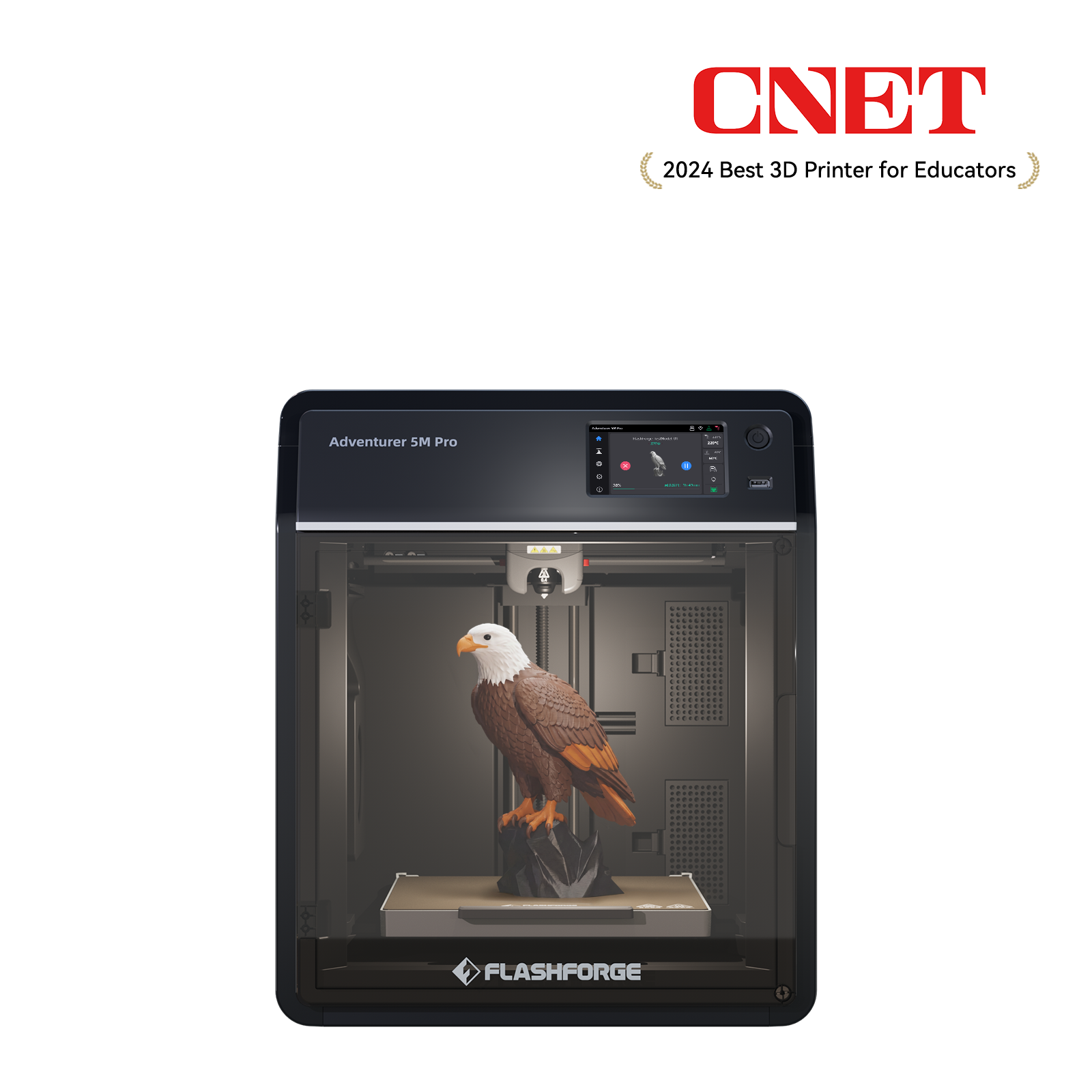
For home use and career training, look for machines that offer speed, stability, and safety. The Flashforge Adventurer 5M Pro, for example, uses a CoreXY metal structure with speeds up to 600 mm/s. It features a fully enclosed chassis and a dual HEPA and activated carbon filtration system that blocks about 99% of particles and VOCs. This makes it suitable for long-term use in a study or near a child's room.
Safety and Supervision Guidelines for Kids Using 3D Printers
Even with a child-friendly model, establishing good safety habits is essential before a 3D printer enters a home or school. In recent years, authoritative organizations have studied 3D printing safety in schools and maker spaces, providing clear principles for parents and teachers.
Safe Materials and Filament Choices
Based on numerous material and health studies, PLA remains the best choice for home and school use. It is derived from renewable resources like corn and sugarcane and is non-toxic. During printing, it primarily releases small amounts of lactic acid-based vapors, which are far safer than the potentially harmful VOCs (like styrene) released by materials such as ABS.
However, research into 3D printing emissions warns that PLA still produces nano-sized particles and some VOCs. Safe does not mean you should print indefinitely in a small, unventilated room. For families where children are the primary users, we suggest the following:
-
Stick to PLA as the main material.
-
Avoid letting children handle materials that require high temperatures, intense ventilation, or chemical post-processing (like ABS or resin).
-
Always keep the printing area well-ventilated.
-
If your printer has an enclosure and filters, keep the door closed while printing and replace filters regularly.
Proper Usage and Monitoring Practices
The US National Institute for Occupational Safety and Health (NIOSH) emphasizes the importance of supervision and maintaining a reasonable distance. For home use, you can apply these principles:
-
Initial Supervision: An adult should accompany the child during the early stages of learning to operate the printer. Ensure they understand risks like high nozzle temperatures and moving parts.
-
Gradual Independence: Once familiar, children can take over more tasks, but running the equipment for long periods without any supervision is not recommended.
-
Distance: Safety guidelines for schools suggest avoiding long periods of standing directly next to the printer's exhaust. In a home setting, it is best to place the printer in a well-ventilated corner and have the child monitor progress through a viewing window or a remote camera.
Maintenance and Handling Safety
Good maintenance ensures both print quality and safety. School safety data highlights that users should check the nozzle and bed for residue before and after every print. Regularly cleaning dust and debris prevents the risk of smoke or small fires during heating. In a home environment, parents should handle regular maintenance while children assist from a safe distance, avoiding direct contact with live or hot components.
Crucially, remind children never to touch the nozzle or freshly printed models with their bare hands. They should wait for the nozzle and bed to cool completely before using the proper tools to remove a model. This prevents burns and teaches respect for the equipment.
Creating a Safe Printing Environment
When setting up your space, follow these common recommendations:
-
Place the printer in a well-ventilated, independent space or a room corner.
-
Keep it away from air conditioning returns and bedrooms where people spend a lot of time.
-
Avoid mixing the printing area with food and dining zones.
-
For frequent use, set up a dedicated printing zone in a study or maker corner, perhaps using a fan or air purifier to dilute indoor particles.
Choosing a machine with these built-in safety features is a responsible decision for a child's health.

Final Thoughts on 3D Printing for Kids in 2026
Children only grow up once, and the 3D printer we choose for them is quietly shaping how they see the world. These tools provide the power to turn ideas into reality. If you can already picture what your child might create with a 3D printer, then now is the right time to get one. Curiosity is a fleeting gift, and its peak moments often pass by quickly.

