









Table of Contents
Ventilation is a critical factor for ABS printing. In indoor settings, small spaces, or high-volume environments, airflow quickly shifts from a recommendation to a strict requirement. This 2026 guide provides quantitative data on ABS emissions from recent studies, real-world user cases, and findings from leading industry reports. You will learn how to select equipment and ventilation setups that prioritize safety without sacrificing efficiency. Our goal is to help you find the right balance between high-performance printing and long-term health.
Quick Answer: Do You Need Ventilation for ABS 3D Printing?
When it comes to the question of whether ABS printing requires ventilation, the technical answer is straightforward. If you print indoors, especially in small rooms or during long, frequent sessions, ventilation is a critical step to plan rather than an optional add-on. Modern research consistently shows that FDM printers release ultra-fine particles (UFPs) and volatile organic compounds (VOCs). ABS is particularly known for emitting gases that contain styrene. Proper ventilation is the baseline for keeping these risks under control, providing actual safety rather than just a false sense of security.
When ABS printing lacks effective ventilation, the risks do not appear as immediate catastrophic failures. Instead, they manifest as a slow decline in air quality, lingering odors, and unnoticed long-term exposure. Many new users focus only on whether the print succeeds, ignoring how many hours they spend sitting next to the machine. Success with this material starts with selecting high-quality supplies; understanding how to choose the best ABS filament is the first step toward reducing printing failures and unnecessary fume exposure.
A 2016 laboratory study published in Environmental Science and Technology tested various desktop FDM printers and filaments, including ABS. The results showed that UFP emission rates range from 10(8) to 10(11) particles per minute depending on the material. The ABS and HIPS combination showed high particle levels and released the most VOCs, such as styrene. Another study by NIOSH researchers in an office setting found that particle emission rates varied from 0.71 x 10(7) to 1400 x 10(7) particles per minute. This confirms that the specific material and operating conditions significantly impact emission levels.
In a closed space, the most immediate sign of ABS printing is the rapid buildup of odor. Styrene has a sharp smell. Even if it does not reach acute toxicity levels, it is enough to cause headaches, dry eyes, and throat discomfort in a small room. Air quality research shows that smell does not perfectly track toxicity levels. However, it serves as an early warning that VOCs in the room are no longer at negligible background levels.
While filtration and ventilation can significantly lower exposure, the rational approach is to combine risk reduction with less time spent near the printer. Do not let down your guard just because you have a filter in place.

Common Safety Mistakes and Practical Recommendations
In practice, many safety issues related to ABS are not caused by the hardware itself. Instead, they stem from usage habits and a misunderstanding of the risks. Recognizing these common mistakes will help you significantly improve safety without adding much cost.
-
Ignoring Ventilation in Small Rooms
One of the most typical errors is treating ABS printing like running a standard computer. Users often fail to set up exhaust systems or consider the length of the print session in small spaces. Studies mentioned earlier show that even PLA can increase UFP concentrations tenfold in a closed room. ABS generally produces much higher levels of VOCs and particles. Working in this environment for long periods is not a safe practice, even if you do not feel immediate symptoms.
-
Relying Only on Open Windows
Many users overestimate the effectiveness of just opening a window. Airflow direction and speed depend on outdoor wind, indoor layout, and temperature differences. It is difficult to guarantee that pollutants are actually leaving the room rather than just circulating inside.
-
Using ABS Without Proper Enclosures
Printing ABS frequently on a completely open-frame machine is a decision many experienced makers eventually regret. Beyond technical issues like warping and cracking, an open structure allows UFPs and VOCs to spread rapidly throughout the room. This increases exposure for everyone sharing the space.
4 Main Safe Ventilation Methods for ABS 3D Printing
The core of ABS ventilation lies in controlling emissions at the source, limiting their spread, and reducing concentrations in your breathing zone through exhaust or filtration. You should address these issues proactively rather than waiting until the smell becomes uncomfortable. This section breaks down feasible solutions across four dimensions: enclosed models, external exhaust, air purification, and room airflow.
-
Using Enclosed 3D Printers with Filtration
3D printers equipped with enclosed chambers and filtration systems are among the best starting points for home and educational ABS printing. An enclosure provides two main benefits. First, it offers temperature control to prevent warping and cracking caused by drafts. Second, it traps UFPs and VOCs within a contained space, passing them through a combination of HEPA and active carbon filters.
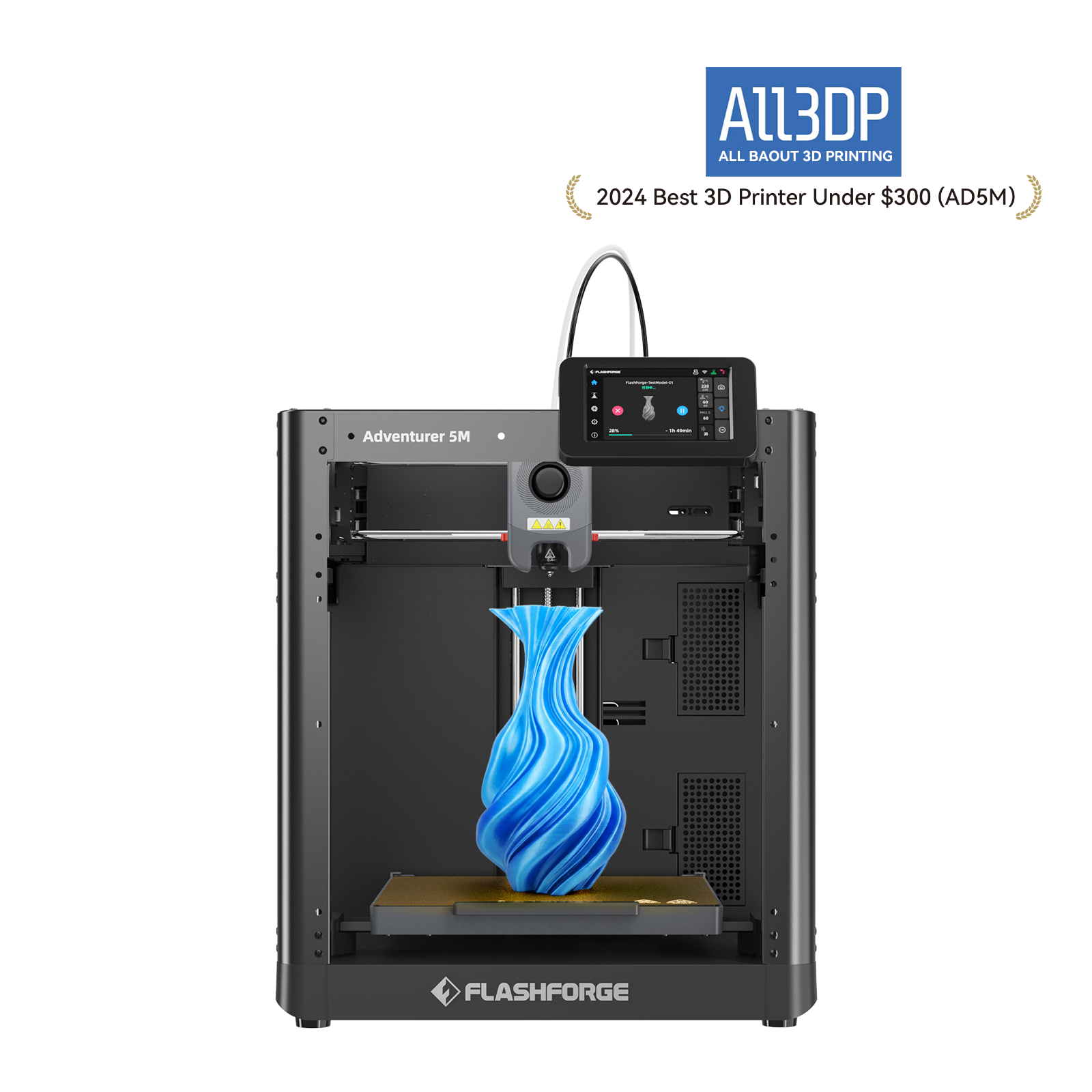
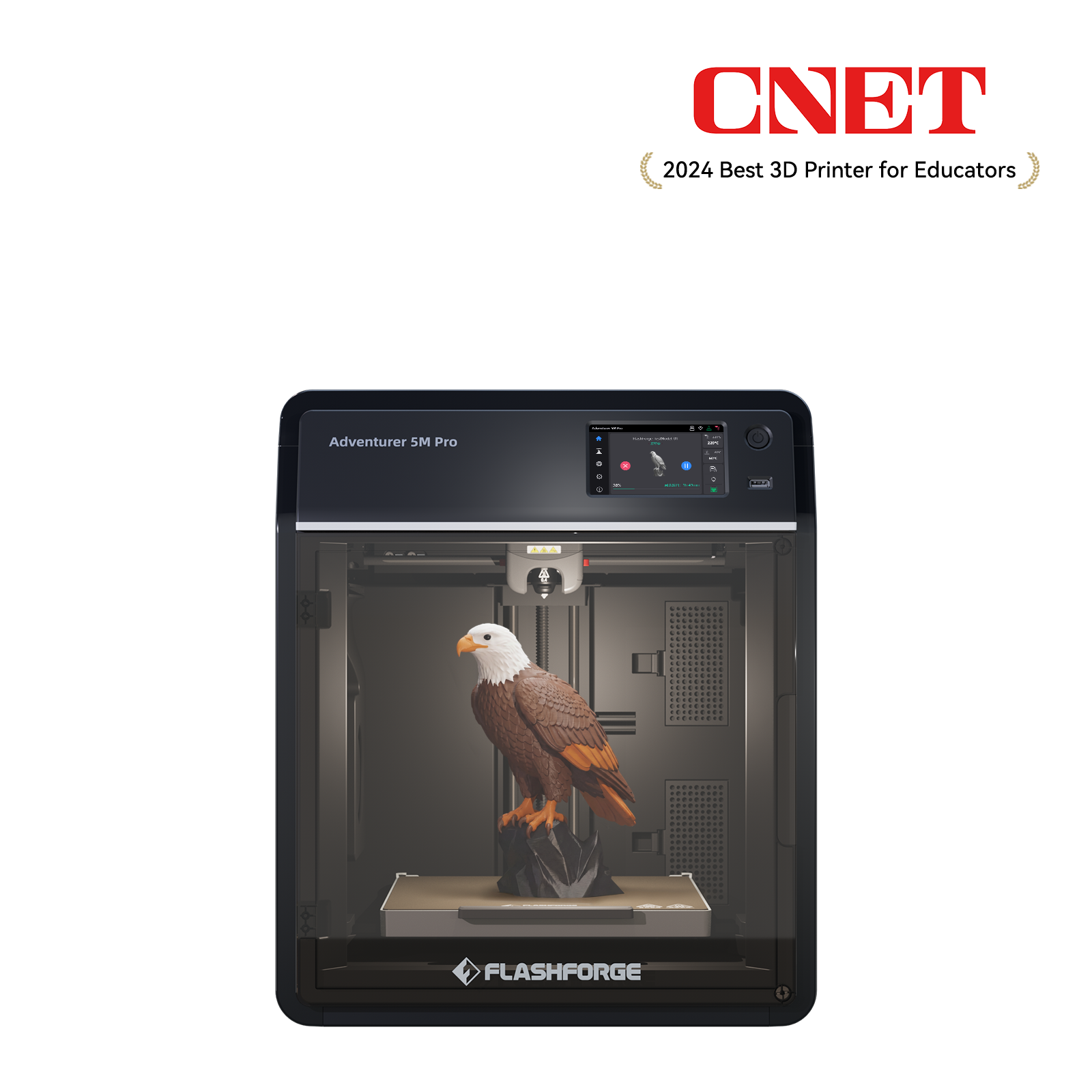
The Flashforge Adventurer 5M Pro is a prime example. It features a fully enclosed structure and a dual-cycle air filtration system. When printing PLA or PETG, it uses external circulation to balance cooling and filtration. For stronger-smelling materials like ABS or ASA, it switches to internal circulation, repeatedly filtering the air inside the chamber to minimize leaks. Furthermore, its built-in TVOC sensor monitors air quality in real-time. If VOC levels exceed safe thresholds, an orange warning appears on the interface, prompting the user to close the door and enable filtration. This visual risk indicator is ideal for users who prioritize long-term safety in home environments.

-
External Venting with Duct Systems
For studios, small businesses, or high-volume users, an external exhaust system that vents emissions directly outdoors is the most reliable choice. Research shows that using engineering controls at the source for multiple printers can significantly lower particle and VOC concentrations back to background levels. This source capture method is more efficient than relying solely on ambient room ventilation.
In practice, users typically use enclosed cabinets or printers with exhaust ports. Exhaust is routed through ducting to a window or wall vent, ensuring a one-way flow from the room to the outside to prevent backdrafts. For those printing large amounts of ABS, this type of system serves as a better long-term infrastructure than a standalone purifier.
-
Air Purifiers with HEPA and Carbon Filters
Air purifiers work best as a supporting measure rather than a standalone solution. HEPA filters are excellent at capturing ultra-fine particles, while active carbon is effective at absorbing odors and certain VOCs. While this combination improves user comfort and reduces the particle load, it has limitations against highly concentrated source emissions.
When setting up your space, place the purifier as close to the printer as possible to create a localized clean zone. Do not place it across the room and expect it to instantly clean the entire area. For home users, combining an enclosed printer featuring HEPA and carbon filtration with a well-placed room purifier is far more reliable than using an open-frame machine with a single purifier.
-
Room Ventilation and Airflow Optimization
Room-level ventilation acts as the foundation for all the previous methods. The EPA notes that the key to indoor air quality is maintaining stable air exchange and preventing pollutants from accumulating in specific spots. This is especially vital in spaces with multiple printers or long operating hours.
Position your printer near an exhaust point and away from your primary workstation. This keeps high-concentration areas away from people and prevents dead zones where pollutants might settle. For users who cannot perform complex hardware modifications, the combination of an enclosed model, strategic placement, and moderate window ventilation offers a balanced mix of cost and effectiveness.
How 3D Printer Setup Affects ABS 3D Printing Safety
The design of a 3D printer, its temperature control, and its placement in a room directly impact safety and the overall experience. Many users initially focus on print size and speed. However, as they print more often, they realize that where the machine sits has a direct link to their physical well-being.
-
Enclosed vs Open Frame Printer Considerations
Open-frame structures work fine for PLA. Once you switch to ABS, temperature swings and drafts affect both print quality and how emissions spread. Enclosed models help in two ways. They stabilize chamber temperatures to improve success rates and limit leak paths to make filtration more effective.
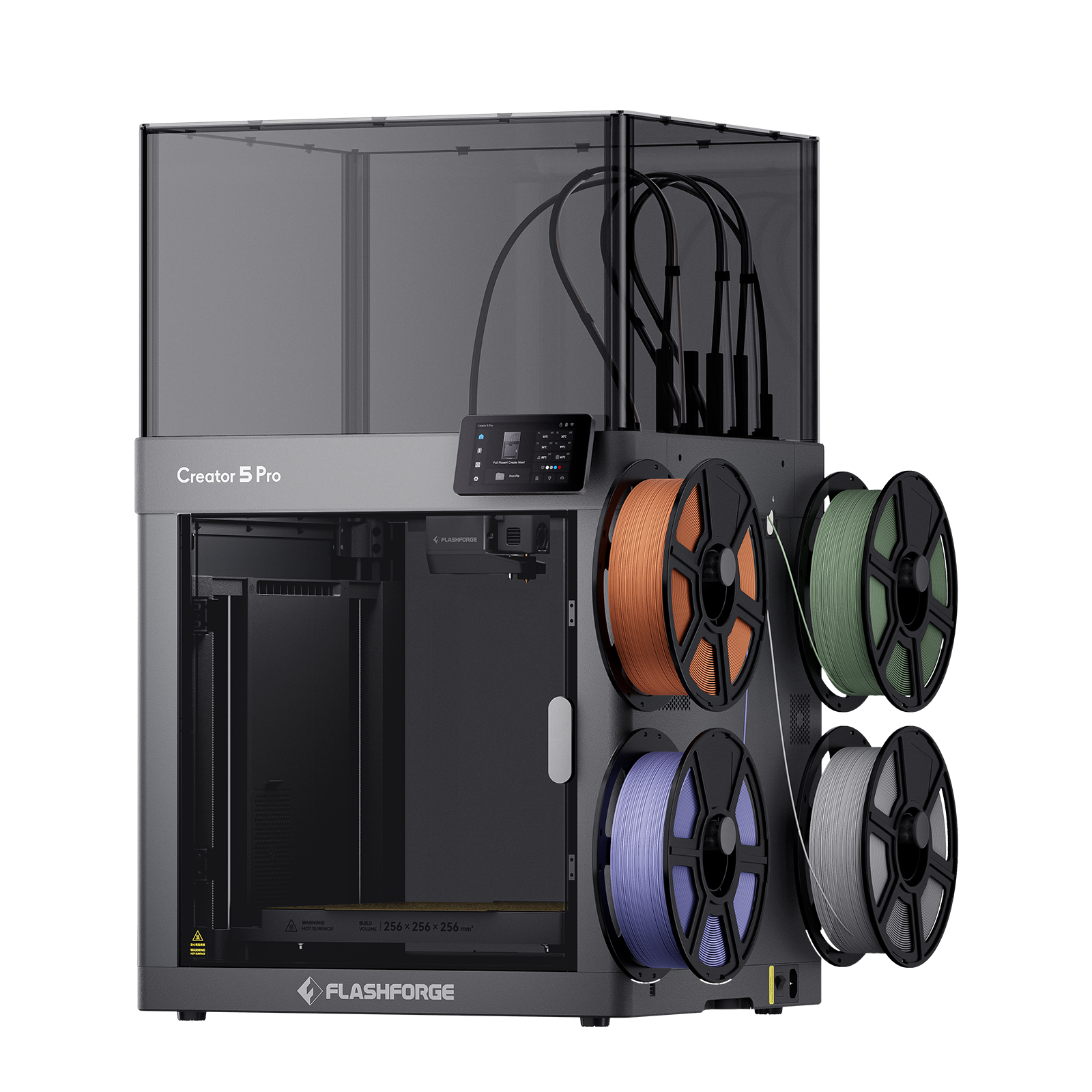
The 2026 best enclosed 3D printer Flashforge Creator 5 Pro serves as a good example. This fully enclosed multi-toolhead platform uses its design to control noise and chamber heat. It also includes HEPA 13 filtration and active carbon modules to lower environmental exposure when printing ABS or ASA. For users moving from a hobby to small-scale production, this combination of structure, filtration, and speed is much more reliable than adding a DIY enclosure to an open machine.
-
Temperature Control and Emission Levels
Research shows that higher printing temperatures usually lead to higher particle and VOC emissions. This is very evident with ABS. However, you cannot simply lower the temperature too much. Low nozzle or bed temperatures cause poor layer adhesion, warping, and weak mechanical parts. This often leads to failed prints and more reprints, which increases total emissions over time.
The better approach is to start with the temperature range provided by the filament supplier. Run a few tests to find the sweet spot that balances strength and stability. Once you find that range, optimize your fan settings and speed rather than blindly pushing for extreme heat.
-
Placement of Printer in Your Workspace
Where you put your 3D printer determines how much ventilation you need. Placing an ABS printer next to your bed versus in a separate room far from your desk results in very different exposure levels. When multiple printers run at once without local exhaust or room division, UFP levels in the workspace rise significantly above background levels. Local engineering controls in the equipment area can bring these levels down quickly.
If possible, place your printer in a small room with a door or near a window. Combining an enclosed model with moderate exhaust provides a much safer experience without requiring major home renovations.
-
Material Handling and Storage Practices
How you manage your materials also affects safety and quality. ABS degrades faster when exposed to humid air and UV light. This leads to poor print results. Keep unopened filament in its original packaging and reseal open spools.
Proper storage reduces stringing, bubbles, and weak layers. More importantly, it prevents failed prints. Real safety comes from a reliable process that minimizes waste. Reducing failed jobs is just as important as using the right safety equipment.
Conclusion
In summary, ABS 3D printing requires a serious approach to ventilation and filtration in almost all indoor settings. This does not mean you should avoid ABS. Instead, it means you should use it with a clear plan. By combining an enclosed structure, a filtration system, proper placement, and room airflow, you can enjoy the strength and heat resistance of ABS while keeping VOC and ultra-fine particle exposure within a controlled range.
FAQ
Is ABS or PETG better?
ABS and PETG each offer distinct advantages. The strength of ABS lies in its high heat resistance of around 100°C and its overall durability, making it ideal for functional parts and industrial use. On the other hand, PETG is much easier to print, suffers from less warping, and offers strong interlayer adhesion with a bit of flexibility. If you need heat resistance and structural strength, choose ABS. If you prioritize ease of printing and stability, PETG is the better choice.
Is PLA or ABS better for beginners?
PLA is significantly better for beginners. I recommend that newcomers start with PLA before moving on to ABS. PLA prints at lower temperatures between 190°C and 220°C and almost never warps, meaning it does not require an enclosed machine. It also produces very little odor and has a much higher success rate because it is less demanding on your hardware. For a deeper dive into their mechanical differences and emissions, reading about the truth about PLA vs ABS filament can help you decide when it is time to upgrade. In contrast, ABS requires an enclosed environment, higher temperature control, and more complex calibration.

What are the downsides of printing with ABS?
While ABS is powerful, it has several clear disadvantages. It is notorious for warping because it is very sensitive to the surrounding temperature. It also produces a strong odor and releases irritating gases during printing, which requires proper ventilation. Additionally, ABS places higher demands on your equipment, making an enclosed 3D printer a necessity, and the complex parameter tuning makes it more difficult to master.
How long does 3D printed ABS last?
The lifespan of an ABS print depends on where you use it. For indoor applications, these parts can typically last three to five years or more. For mechanical or load-bearing parts, the longevity depends on the specific design and the stress levels they endure. However, ABS is susceptible to UV light, so it may become brittle and age faster if used outdoors.