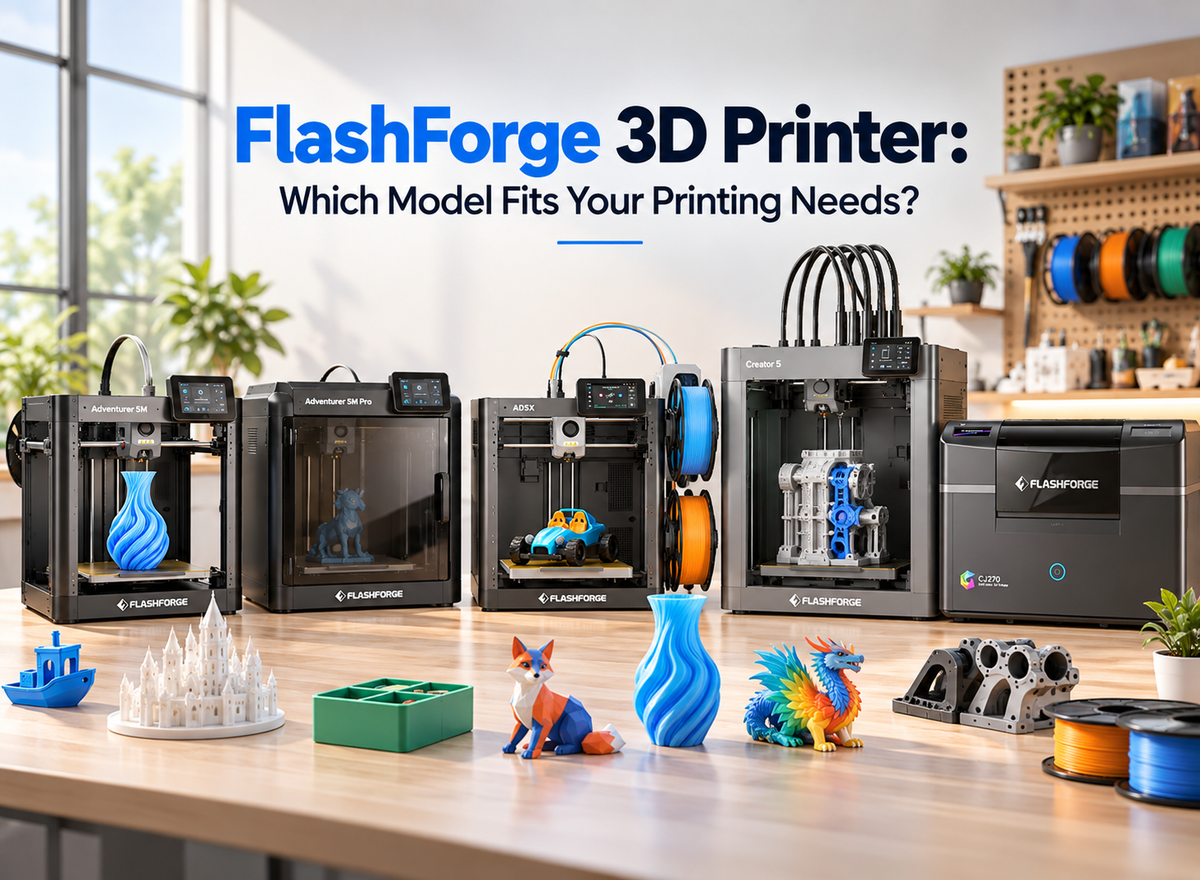



UV printing uses ultraviolet light to cure specially formulated ink soon after it reaches a surface. It can add graphics to signs, packaging prototypes, gifts, and many other products. The term also appears in 3D printing, where UV light may solidify the material that forms an object. The distinction matters: one process decorates an existing surface, while the other builds a physical model.
What Is UV Printing and How Does It Work?
In conventional UV inkjet printing, printheads deposit ink onto an existing material, called a substrate. A UV lamp then cures the ink. UV light triggers a chemical reaction that solidifies it on the surface.
How UV Light Cures the Ink
UV-curable inks contain components that react when exposed to an appropriate wavelength and dose of UV light. The printer deposits droplets in the required pattern, and its curing system solidifies them. This allows detailed graphics and prompt handling.
Curing and adhesion depend on the ink, lamp settings, and substrate. A print that feels dry still needs testing for its intended use. Surface energy, ink selection, and primers can all affect whether the ink stays attached. PRINTING United Alliance explains these adhesion factors.
How Is UV Curing Used in Full-Color 3D Printing?
Traditional UV inkjet printing applies an image to an existing object. UV-curable 3D printing instead makes the object itself, one layer at a time. The processes share a curing principle, but they serve different purposes.
The Flashforge CJ270 full-color 3D printer uses MJP material jetting. Its printheads deposit tiny droplets of UV-curable photopolymer build materials along with support material. Each layer is cured as the model takes shape. The material set includes cyan, magenta, yellow, black, white, clear, and water-soluble support. Flashforge specifies more than 10 million colors and a minimum layer thickness of 7 μm. After printing, the support can be dissolved away.
The CJ270 suits small, detailed figures, collectibles, and appearance prototypes. Creating color and selected transparent features during the build can reduce hand painting. Its build volume is 180 × 120 × 100 mm; results still depend on the model file and finishing. Flashforge’s multicolor vs full-color 3D printing guide explains how this differs from printing with a limited set of colored filaments.
Main Types of UV Printing
The four common formats are defined mainly by how the material reaches the printheads:
- Flatbed UV printing holds a flat or reasonably level rigid item on a bed. It is commonly used for panels, plaques, and product surfaces.
- Roll-to-roll UV printing feeds flexible material through the machine, making it suitable for graphics on compatible films, banners, or label stock.
- UV DTF printing prints a design onto a transfer film for later application to a compatible object. It helps when printing directly onto the final shape would be difficult; adhesion still needs testing.
- Cylindrical UV printing rotates a round item so the printhead can decorate part or all of its curved surface, depending on the machine and fixture.
These formats decorate existing items rather than building them.
What Materials Can Be UV Printed?
Ink adhesion varies with coating, texture, flexibility, and use. Test the exact substrate before production.

Plastic, Acrylic, and Glass
Rigid acrylic and some plastics are common choices for signs, displays, and decorated products. Plastics vary substantially: ink that bonds to one sheet may lift from another with a different surface treatment. Glass can carry attractive graphics, but it is a demanding adhesion surface and may require a compatible primer. Test frequently handled items.
Metal, Wood, and Ceramic
Coated metal can be used for branded panels and labels, provided its coating works with the ink. Bare metal and glazed ceramic may need additional preparation or an adhesion-promoting primer. Wood grain and porosity can obscure fine details; sealing may help.
Paper, Cardboard, and Flexible Materials
Compatible paper and cardboard are useful for packaging mockups, short-run displays, and samples. Flexible films and other roll-fed materials require an ink system that can withstand bending. Test for cracking or peeling after bending.
| Material | Common uses | Primer needed? | Main consideration |
|---|---|---|---|
| Acrylic and rigid plastic | Signs, displays, gifts | Sometimes | Plastic formulation and adhesion |
| Glass and ceramic | Décor, promotional items | Often worth testing | Smooth surfaces and handling wear |
| Coated or bare metal | Nameplates, panels | Depends on coating | Surface preparation and corrosion exposure |
| Wood | Décor, plaques | Sometimes; sealing may help | Grain, porosity, and finish |
| Paper and cardboard | Packaging prototypes | Substrate dependent | Absorption, coating, and folding |
| Flexible film | Labels, banners, transfers | Depends on ink and film | Flexing, stretch, and application |
Confirm the ink, primer, and substrate combination before a full run. A material’s name alone cannot guarantee adhesion.
What Is UV Printing Used For?
UV printing is useful for decorating existing products, particularly samples and personalized short runs.
Signs and Display Graphics
Flatbed printers can put logos, illustrations, and text on compatible rigid panels. Roll-fed systems can make flexible display graphics. White ink can help colors remain visible on clear or dark materials, while a clear ink or coating may add selected gloss or raised effects if the equipment supports it. For outdoor signs, check the ink-and-substrate exposure rating.
Packaging and Product Prototypes
Design teams can decorate sample cartons, sleeves, panels, or containers to review artwork before a larger production run. For food contact, toys, or other regulated uses, confirm material approvals with the supplier.
A full-color 3D printer serves a related but different prototyping need from a desktop 3D printer that uses filament. It can create a small physical model with shape and surface color together when a graphic on an existing box or object cannot show the intended form.
Personalized Gifts and Promotional Products
Names, photographs, and variable designs can be printed on suitable plaques, cases, or other prepared products. The choice between direct flatbed printing, a transfer, and cylindrical printing depends on the item’s geometry and how much of its surface needs decoration. For frequently handled products, request an abrasion and cleaning test.
Home Décor and Industrial Applications
Compatible decorative panels, tiles, and furniture elements can carry custom graphics. Industrial users may print markings or interface graphics on specified components. Validate the substrate against its actual exposure, including cleaning chemicals where relevant.
What Are the Advantages and Limitations of UV Printing?
UV printing combines detailed digital artwork with rapid curing. It supports customization without making a screen for each design, and certain systems offer white or clear ink effects. Depending on the equipment and ink, it can decorate materials ranging from rigid panels to flexible films.
Equipment and consumables can be costly. Some surfaces need primer; printheads and curing hardware need maintenance. Test samples for the handling, cleaning, sunlight, and moisture they will face.
UV Printing vs Other Printing Technologies
Choose according to whether the job needs surface graphics or a new physical object.
For context, a filament 3D printer builds an object from 3D printer filament, whereas UV inkjet, screen, and sublimation methods decorate an existing substrate.
A multi color 3D printer such as Creator 5 and an enclosed 3D printer such as Creator 5 Pro are filament-system options, not substitutes for applying graphics to a finished surface.
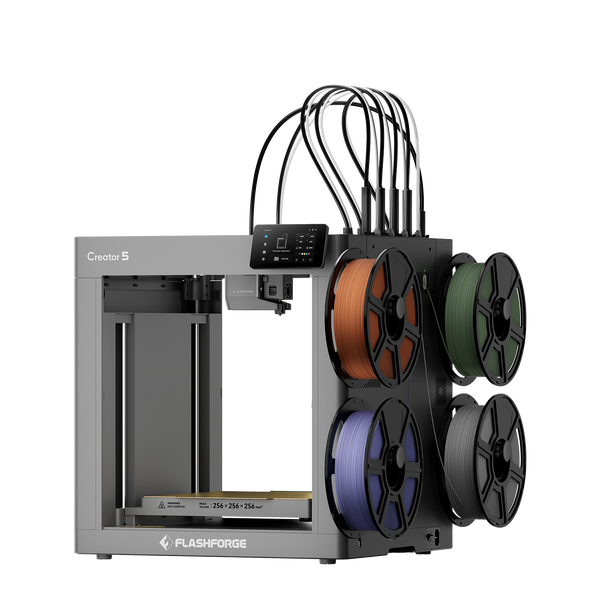
Flashforge Creator 5 4-Toolheads Multi-Color 3D Printer | 500% Faster, Zero Purge Waste
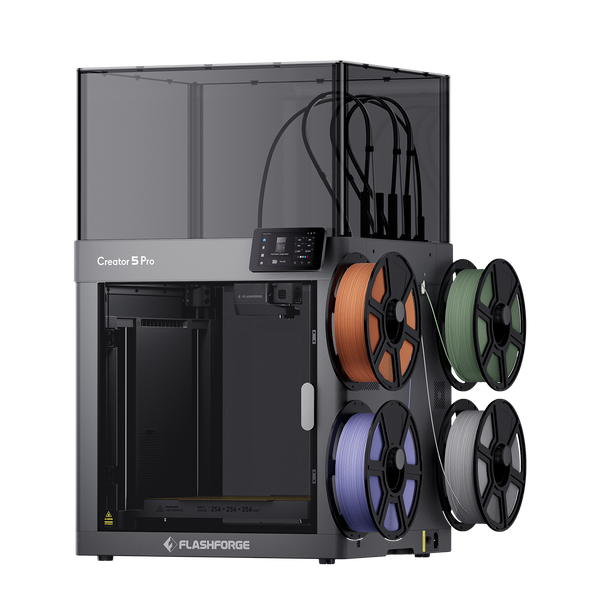
Flashforge Creator 5 Pro 4-Toolheads Enclosed Multi-Color 3D Printer | 500% Faster, Zero Purge Waste
UV Printing vs Screen Printing
Screen printing pushes ink through a prepared stencil. Its setup can make sense for repeated artwork in longer runs, especially when each item uses the same design. Digital UV printing is often more convenient for short runs, changing names, photographic artwork, and prototypes. Compare costs using the full job, including setup and finishing.
UV Printing vs Sublimation Printing
Sublimation transfers dye using heat, typically onto polyester or specially coated products. It can be a strong fit for compatible fabric and coated blanks. UV inkjet printing places a cured ink layer on a compatible surface and offers a different range of rigid-product applications. Match each method to the material and required durability.
UV Printing vs UV Resin 3D Printing
“UV resin 3D printing” describes more than one process. In vat photopolymerization, light cures selected areas of resin held in a vat. In material jetting, printheads deposit build material as droplets and cure deposited layers. The US National Institute of Standards and Technology describes material jetting and vat photopolymerization as distinct additive manufacturing methods.
For a small object that needs its shape and detailed color produced together, the CJ270’s material-jetting approach may fit better than printing artwork onto a pre-existing blank. Flashforge’s CJ270 review describes its workflow and suitable applications in more detail.
| Technology | Best for | Compatible materials | Main advantage |
|---|---|---|---|
| UV inkjet printing | Graphics on existing items | Qualified rigid or flexible substrates | Custom surface decoration |
| Screen printing | Repeated designs at suitable volumes | Substrates matched to ink and process | Efficient repeat production after setup |
| Sublimation | Compatible textiles and coated blanks | Polyester and suitable coated items | Dye-based decoration on matched substrates |
| UV-curable material jetting | Small, detailed physical models | Printer-specific photopolymers | Builds form and color together |
| Vat photopolymerization | Detailed resin models | Printer-compatible liquid resin | Fine 3D detail without jetting build material |
The last two methods make a model; the first three decorate an existing substrate. This distinction helps narrow the choice quickly.
How Do You Choose the Right UV Printing Method?
Start with the item you need at the end, then work backward through its material, shape, appearance, and production quantity.
Consider the Material and Surface
Identify the exact substrate and its coating, not just “plastic” or “metal.” Ask a supplier to test ink adhesion, primer requirements, and resistance to normal handling. If the product has special safety or regulatory requirements, request the relevant documentation before production.
Consider the Product Shape and Size
For a flat panel, consider flatbed printing. For a flexible web, consider roll-to-roll. For a bottle or tumbler, check a cylindrical setup or an appropriate transfer. If the object does not yet exist and its form must be manufactured, compare additive manufacturing processes instead.
Consider Color and Durability Requirements
White ink matters on transparent and dark surfaces; clear effects require a compatible system. Outdoor signs, washable products, and frequently touched objects need exposure and abrasion testing. For a realistic, small 3D figure, check that the digital model contains the texture and color information needed for full-color output.
Consider Production Volume and Cost
Compare finished-item cost, including setup, primer, maintenance, and labor. For 3D models, include support, cleaning, and finishing. Short custom runs and large identical runs may favor different methods.
Conclusion
UV printing generally means curing ink on an existing surface. It works across many qualified materials, but adhesion and durability must be tested for the exact item and use. UV-curable 3D printing uses a related curing principle to build a new object. Choose surface printing for graphics on a substrate and a suitable 3D process when the shape itself needs to be made.
Frequently Asked Questions
Is UV Printing Permanent?
UV-cured ink is intended to form a lasting print, but no method is permanent under every condition. Adhesion, abrasion, chemicals, and sunlight determine how long a specific print remains usable.
Can UV Printing Be Used on Any Material?
No. Printer clearance, ink chemistry, substrate coating, and surface preparation all matter. Test the exact material, particularly glass, untreated metal, and difficult plastics.
Is UV Printing Waterproof?
A fully cured print may resist incidental water, but “waterproof” is a product-level claim. Water exposure can affect the substrate or ink adhesion, so request testing for the intended conditions.
Does UV Printing Fade Outdoors?
It can. Fade resistance depends on the ink, substrate, sunlight exposure, and any protective finish. Check the manufacturer’s outdoor specifications and test the complete construction.
Is UV Printing the Same as UV Resin 3D Printing?
No. Conventional UV printing cures ink on a surface. UV resin 3D printing cures build material into a physical object; material jetting and vat photopolymerization are two different ways to do that.
SEO Title: What Is UV Printing? Uses, Materials & How It Works
Meta Description: Learn how UV printing works, what materials it supports, common applications, key limitations, and how it differs from UV-based 3D printing.
Article Summary: UV printing cures specialized ink on a surface for signs, packaging, gifts, and prototypes. This guide covers methods, materials, uses, limits, and UV-based 3D printing.
UV printing uses ultraviolet light to cure specially formulated ink soon after it reaches a surface. It can add graphics to signs, packaging prototypes, gifts, and many other products. The term also appears in 3D printing, where UV light may solidify the material that forms an object. The distinction matters: one process decorates an existing surface, while the other builds a physical model.
What Is UV Printing and How Does It Work?
In conventional UV inkjet printing, printheads deposit ink onto an existing material, called a substrate. A UV lamp then cures the ink. UV light triggers a chemical reaction that solidifies it on the surface.

How UV Light Cures the Ink
UV-curable inks contain components that react when exposed to an appropriate wavelength and dose of UV light. The printer deposits droplets in the required pattern, and its curing system solidifies them. This allows detailed graphics and prompt handling.
Curing and adhesion depend on the ink, lamp settings, and substrate. A print that feels dry still needs testing for its intended use. Surface energy, ink selection, and primers can all affect whether the ink stays attached. PRINTING United Alliance explains these adhesion factors.
How Is UV Curing Used in Full-Color 3D Printing?
Traditional UV inkjet printing applies an image to an existing object. UV-curable 3D printing instead makes the object itself, one layer at a time. The processes share a curing principle, but they serve different purposes.
The Flashforge CJ270 full-color 3D printer uses MJP material jetting. Its printheads deposit tiny droplets of UV-curable photopolymer build materials along with support material. Each layer is cured as the model takes shape. The material set includes cyan, magenta, yellow, black, white, clear, and water-soluble support. Flashforge specifies more than 10 million colors and a minimum layer thickness of 7 μm. After printing, the support can be dissolved away.
The CJ270 suits small, detailed figures, collectibles, and appearance prototypes. Creating color and selected transparent features during the build can reduce hand painting. Its build volume is 180 × 120 × 100 mm; results still depend on the model file and finishing. Flashforge’s multicolor vs full-color 3D printing guide explains how this differs from printing with a limited set of colored filaments.
<iframe width="560" height="315" src="https://www.youtube.com/embed/DZJWxU1COfg" title="Imagine the Color. Print the Color. | Flashforge CJ270" frameborder="0" allow="accelerometer; autoplay; clipboard-write; encrypted-media; gyroscope; picture-in-picture; web-share" referrerpolicy="strict-origin-when-cross-origin" allowfullscreen></iframe>
Main Types of UV Printing
The four common formats are defined mainly by how the material reaches the printheads:
- Flatbed UV printing holds a flat or reasonably level rigid item on a bed. It is commonly used for panels, plaques, and product surfaces.
- Roll-to-roll UV printing feeds flexible material through the machine, making it suitable for graphics on compatible films, banners, or label stock.
- UV DTF printing prints a design onto a transfer film for later application to a compatible object. It helps when printing directly onto the final shape would be difficult; adhesion still needs testing.
- Cylindrical UV printing rotates a round item so the printhead can decorate part or all of its curved surface, depending on the machine and fixture.
These formats decorate existing items rather than building them.
What Materials Can Be UV Printed?
Ink adhesion varies with coating, texture, flexibility, and use. Test the exact substrate before production.
Plastic, Acrylic, and Glass
Rigid acrylic and some plastics are common choices for signs, displays, and decorated products. Plastics vary substantially: ink that bonds to one sheet may lift from another with a different surface treatment. Glass can carry attractive graphics, but it is a demanding adhesion surface and may require a compatible primer. Test frequently handled items.
Metal, Wood, and Ceramic
Coated metal can be used for branded panels and labels, provided its coating works with the ink. Bare metal and glazed ceramic may need additional preparation or an adhesion-promoting primer. Wood grain and porosity can obscure fine details; sealing may help.
Paper, Cardboard, and Flexible Materials
Compatible paper and cardboard are useful for packaging mockups, short-run displays, and samples. Flexible films and other roll-fed materials require an ink system that can withstand bending. Test for cracking or peeling after bending.
| Material | Common uses | Primer needed? | Main consideration |
|---|---|---|---|
| Acrylic and rigid plastic | Signs, displays, gifts | Sometimes | Plastic formulation and adhesion |
| Glass and ceramic | Décor, promotional items | Often worth testing | Smooth surfaces and handling wear |
| Coated or bare metal | Nameplates, panels | Depends on coating | Surface preparation and corrosion exposure |
| Wood | Décor, plaques | Sometimes; sealing may help | Grain, porosity, and finish |
| Paper and cardboard | Packaging prototypes | Substrate dependent | Absorption, coating, and folding |
| Flexible film | Labels, banners, transfers | Depends on ink and film | Flexing, stretch, and application |
Confirm the ink, primer, and substrate combination before a full run. A material’s name alone cannot guarantee adhesion.
What Is UV Printing Used For?
UV printing is useful for decorating existing products, particularly samples and personalized short runs.
Signs and Display Graphics
Flatbed printers can put logos, illustrations, and text on compatible rigid panels. Roll-fed systems can make flexible display graphics. White ink can help colors remain visible on clear or dark materials, while a clear ink or coating may add selected gloss or raised effects if the equipment supports it. For outdoor signs, check the ink-and-substrate exposure rating.
Packaging and Product Prototypes
Design teams can decorate sample cartons, sleeves, panels, or containers to review artwork before a larger production run. For food contact, toys, or other regulated uses, confirm material approvals with the supplier.
A full-color 3D printer serves a related but different prototyping need from a desktop 3D printer that uses filament. It can create a small physical model with shape and surface color together when a graphic on an existing box or object cannot show the intended form.
Personalized Gifts and Promotional Products
Names, photographs, and variable designs can be printed on suitable plaques, cases, or other prepared products. The choice between direct flatbed printing, a transfer, and cylindrical printing depends on the item’s geometry and how much of its surface needs decoration. For frequently handled products, request an abrasion and cleaning test.
Home Décor and Industrial Applications
Compatible decorative panels, tiles, and furniture elements can carry custom graphics. Industrial users may print markings or interface graphics on specified components. Validate the substrate against its actual exposure, including cleaning chemicals where relevant.
What Are the Advantages and Limitations of UV Printing?
UV printing combines detailed digital artwork with rapid curing. It supports customization without making a screen for each design, and certain systems offer white or clear ink effects. Depending on the equipment and ink, it can decorate materials ranging from rigid panels to flexible films.
Equipment and consumables can be costly. Some surfaces need primer; printheads and curing hardware need maintenance. Test samples for the handling, cleaning, sunlight, and moisture they will face.
UV Printing vs Other Printing Technologies
Choose according to whether the job needs surface graphics or a new physical object.
For context, a filament 3D printer builds an object from 3D printer filament, whereas UV inkjet, screen, and sublimation methods decorate an existing substrate.
A multi color 3D printer such as Creator 5 and an enclosed 3D printer such as Creator 5 Pro are filament-system options, not substitutes for applying graphics to a finished surface.
Flashforge Creator 5 4-Toolheads Multi-Color 3D Printer | 500% Faster, Zero Purge Waste
Flashforge Creator 5 Pro 4-Toolheads Enclosed Multi-Color 3D Printer | 500% Faster, Zero Purge Waste
UV Printing vs Screen Printing
Screen printing pushes ink through a prepared stencil. Its setup can make sense for repeated artwork in longer runs, especially when each item uses the same design. Digital UV printing is often more convenient for short runs, changing names, photographic artwork, and prototypes. Compare costs using the full job, including setup and finishing.
UV Printing vs Sublimation Printing
Sublimation transfers dye using heat, typically onto polyester or specially coated products. It can be a strong fit for compatible fabric and coated blanks. UV inkjet printing places a cured ink layer on a compatible surface and offers a different range of rigid-product applications. Match each method to the material and required durability.
UV Printing vs UV Resin 3D Printing
“UV resin 3D printing” describes more than one process. In vat photopolymerization, light cures selected areas of resin held in a vat. In material jetting, printheads deposit build material as droplets and cure deposited layers. The US National Institute of Standards and Technology describes material jetting and vat photopolymerization as distinct additive manufacturing methods.
For a small object that needs its shape and detailed color produced together, the CJ270’s material-jetting approach may fit better than printing artwork onto a pre-existing blank. Flashforge’s CJ270 review describes its workflow and suitable applications in more detail.
| Technology | Best for | Compatible materials | Main advantage |
|---|---|---|---|
| UV inkjet printing | Graphics on existing items | Qualified rigid or flexible substrates | Custom surface decoration |
| Screen printing | Repeated designs at suitable volumes | Substrates matched to ink and process | Efficient repeat production after setup |
| Sublimation | Compatible textiles and coated blanks | Polyester and suitable coated items | Dye-based decoration on matched substrates |
| UV-curable material jetting | Small, detailed physical models | Printer-specific photopolymers | Builds form and color together |
| Vat photopolymerization | Detailed resin models | Printer-compatible liquid resin | Fine 3D detail without jetting build material |
The last two methods make a model; the first three decorate an existing substrate. This distinction helps narrow the choice quickly.
How Do You Choose the Right UV Printing Method?
Start with the item you need at the end, then work backward through its material, shape, appearance, and production quantity.
Consider the Material and Surface
Identify the exact substrate and its coating, not just “plastic” or “metal.” Ask a supplier to test ink adhesion, primer requirements, and resistance to normal handling. If the product has special safety or regulatory requirements, request the relevant documentation before production.
Consider the Product Shape and Size
For a flat panel, consider flatbed printing. For a flexible web, consider roll-to-roll. For a bottle or tumbler, check a cylindrical setup or an appropriate transfer. If the object does not yet exist and its form must be manufactured, compare additive manufacturing processes instead.
Consider Color and Durability Requirements
White ink matters on transparent and dark surfaces; clear effects require a compatible system. Outdoor signs, washable products, and frequently touched objects need exposure and abrasion testing. For a realistic, small 3D figure, check that the digital model contains the texture and color information needed for full-color output.
Consider Production Volume and Cost
Compare finished-item cost, including setup, primer, maintenance, and labor. For 3D models, include support, cleaning, and finishing. Short custom runs and large identical runs may favor different methods.
Conclusion
UV printing generally means curing ink on an existing surface. It works across many qualified materials, but adhesion and durability must be tested for the exact item and use. UV-curable 3D printing uses a related curing principle to build a new object. Choose surface printing for graphics on a substrate and a suitable 3D process when the shape itself needs to be made.
Frequently Asked Questions
Is UV Printing Permanent?
UV-cured ink is intended to form a lasting print, but no method is permanent under every condition. Adhesion, abrasion, chemicals, and sunlight determine how long a specific print remains usable.
Can UV Printing Be Used on Any Material?
No. Printer clearance, ink chemistry, substrate coating, and surface preparation all matter. Test the exact material, particularly glass, untreated metal, and difficult plastics.
Is UV Printing Waterproof?
A fully cured print may resist incidental water, but “waterproof” is a product-level claim. Water exposure can affect the substrate or ink adhesion, so request testing for the intended conditions.
Does UV Printing Fade Outdoors?
It can. Fade resistance depends on the ink, substrate, sunlight exposure, and any protective finish. Check the manufacturer’s outdoor specifications and test the complete construction.
Is UV Printing the Same as UV Resin 3D Printing?
No. Conventional UV printing cures ink on a surface. UV resin 3D printing cures build material into a physical object; material jetting and vat photopolymerization are two different ways to do that.