


ASA is widely used for outdoor and functional 3D printing because it offers strong UV resistance, weather durability, and better heat performance than many beginner filaments. It is a good fit for outdoor parts, brackets, covers, garden accessories, signage, and functional prototypes.
ASA can absorb moisture from the air, but it usually does so more slowly than highly moisture-sensitive materials such as nylon, TPU, and PVA. The problem is that even mild moisture can still affect print quality when ASA is heated in the nozzle. Wet ASA may cause popping sounds, bubbles, stringing, rough surfaces, weaker layers, and inconsistent extrusion.
Does ASA Filament Absorb Moisture?
Yes. ASA is hygroscopic, which means it can absorb moisture from the surrounding air. It is not usually as moisture-sensitive as nylon or TPU, but an open ASA spool should still be protected from humidity.
Why Moisture Matters for ASA Printing
When a damp filament enters the hot end, trapped moisture can turn into steam during extrusion. Flashforge’s article on filament humidity and print quality explains that moisture can create bubbles, cracks, poor surface quality, and weaker layer adhesion.
For ASA, moisture problems often appear alongside heat-related printing issues. A spool may look fine on the outside, but the print can still show rough walls, small pits, stringing, or unstable extrusion after the filament is heated.
ASA vs PLA, PETG, Nylon, and TPU
ASA sits in the middle of the common FDM materials for moisture sensitivity. It needs better storage care than PLA, but it is generally less demanding than nylon, TPU, or water-soluble support materials.
|
Filament |
Moisture Sensitivity |
Typical Moisture Symptoms |
Drying Priority |
|
PLA |
Low to medium |
Stringing, rough surface, brittle prints |
Dry when quality drops |
|
PETG |
Medium |
Stringing, bubbles, weak layers |
Dry before critical prints |
|
ASA |
Low to medium |
Popping, bubbles, rough finish, weak bonding |
Dry after open-air exposure |
|
Nylon |
High |
Bubbles, poor strength, severe stringing |
Dry before most prints |
|
TPU |
High |
Stringing, popping, inconsistent extrusion |
Dry before important prints |
For broader material selection, a comparison of 3D printer filament types can help separate ASA from PLA, PETG, TPU, nylon, and fiber-filled materials before choosing a spool for a functional part.
How Fast Does ASA Absorb Moisture?
ASA does not usually become unusable after a few hours in normal indoor air. The risk increases when the spool stays open for a full day in humid air, several days in a room without dry storage, or an unknown amount of time after the factory bag has been opened.

ASA Moisture Absorption in the First 24 Hours
In a dry indoor room, ASA usually remains printable during the first day of exposure. The spool should still be returned to a sealed bag or dry box after use.
In a humid room, the first 24 hours can already matter. You may not see dramatic failure immediately, but small strings, light popping, or surface roughness can start to appear, especially on long prints or prints with fine surface detail.
ASA Moisture Buildup After Several Days
After several days in the open air, the effects of moisture tend to become more noticeable, making drying a safer choice before printing. While ASA may still feed through the printer, you are more likely to see issues such as bubbles, weaker layer bonding, and inconsistent wall quality.
This is especially important for outdoor or functional parts. ASA is often chosen because the final part needs durability, so printing with a damp spool defeats the purpose of choosing a stronger material.
Exposure Time That May Require Drying
Use exposure time as a practical warning sign, not an exact rule. The room environment, spool age, packaging, and filament formulation all change the result.
|
ASA Exposure Condition |
Drying Recommendation |
|
Open for a few hours in a dry room |
Usually printable, store after use |
|
Open overnight in normal indoor air |
Dry for critical or cosmetic prints |
|
Open for several days |
Dry before printing |
|
Exposed to humid air |
Dry before printing |
|
Unknown storage history |
Dry before printing |
|
Visible bubbles, popping, or weak extrusion |
Dry before continuing |
If you're working on a large ASA print, a functional bracket, or a production part, it's best to dry the filament first if you're unsure how long it has been exposed to air.
Why ASA Absorption Speed Varies by Environment
Humidity is not the only factor. Temperature, air movement, spool packaging, filament additives, and storage conditions all affect how quickly ASA absorbs moisture.
A fresh spool stored in a sealed bag with desiccant behaves differently from an opened spool sitting near a window, heater, humid garage, or basement. ASA-CF, ASA-GF, and other modified ASA blends may also behave differently from standard ASA.
Key Factors That Affect ASA Moisture Absorption
ASA moisture absorption is controlled by both the room and the spool. Good storage reduces the need for emergency drying before every print.
Ambient Humidity and Temperature
Higher humidity increases the moisture available for the filament to absorb. Warm rooms can also speed up material exposure effects when the spool is stored in open air.
For consistent ASA printing, keep opened spools away from bathrooms, garages, basements, laundry rooms, and any space with frequent humidity changes. A dry indoor storage area gives more predictable results.
Filament Formulation and Additive Differences
Not all ASA filaments behave the same way. Pigments, modifiers, fiber reinforcement, and brand-specific formulas can affect flow, drying needs, surface finish, and moisture response.
Standard ASA is usually easier to control than some filled or modified ASA materials. For ASA-CF or ASA-GF, follow the filament maker’s drying and nozzle guidance because fiber-filled materials may need different hardware and storage care.
Spool Packaging and Storage Condition
Factory-sealed ASA with desiccant is usually better protected than an opened spool. Once the bag is opened, the storage method becomes part of the print setup.
Flashforge ASA filament lists a recommended printing and storage humidity of room temperature to 40°C and no more than 20% RH when sealed with desiccant. That is a useful target for long-term storage and consistent print quality.
Open-Air Printing vs Dry-Box Printing
Open-air printing can work for ASA if the spool is dry and the print is not very long. For long ASA prints, humid rooms, or important functional parts, printing directly from a dry box gives better moisture control.
The printer environment also matters. ASA is not only affected by moisture. It also needs a stable enclosed printing space to reduce warping and layer stress. A comparison of an open vs enclosed 3D printer helps explain why enclosure design matters more as materials become more temperature-sensitive.
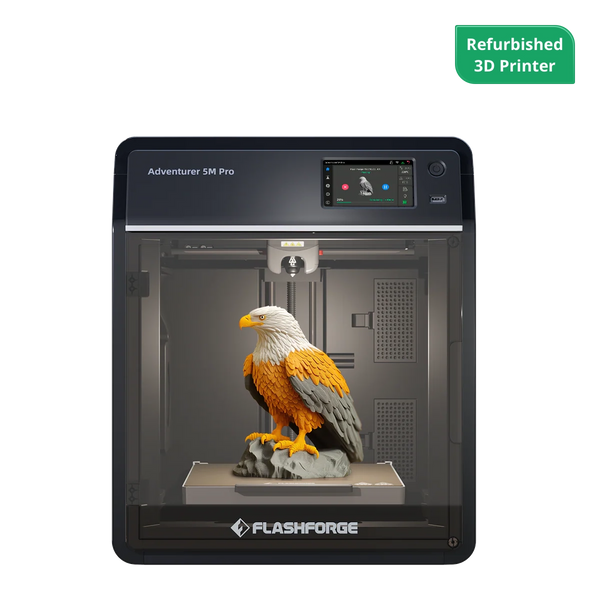
For entry-level enclosed ASA printing, the Flashforge Adventurer 5M Pro is a practical option. It uses an enclosed structure, CoreXY motion, automatic leveling, a PEI build plate, and dual HEPA plus activated carbon filtration. It is suitable for users who want to move beyond PLA and PETG into smaller ASA or ABS functional parts with a more beginner-friendly workflow.
Signs of Moisture in ASA Filament
Wet ASA does not always fail immediately. It often shows small quality problems first, then becomes harder to control during longer prints.

Popping or Hissing During Extrusion
Popping or hissing usually means moisture is turning into steam inside the hot end. This is one of the clearest signs that ASA should be dried.
Stop printing if the sound is frequent and the surface is also rough or bubbly. Continuing the print may waste filament and produce weak parts.
Stringing, Bubbles, and Surface Defects
Wet ASA can create thin strings, tiny surface bubbles, pits, or uneven walls. These defects may look like a slicer problem, but drying the spool should be checked before changing many settings.
If the same ASA profile worked before and the print quality suddenly drops, moisture is a likely cause.
Reduced Layer Adhesion and Print Strength
Moisture can weaken layer bonding because steam disrupts stable extrusion. The part may look acceptable but split more easily under stress.
This matters for ASA because many ASA prints are functional. Outdoor brackets, clips, covers, and fixtures need consistent layer adhesion, not only a clean surface.
Unstable Flow and Inconsistent Extrusion
Damp ASA can extrude unevenly. You may see thin walls, gaps, rough corners, or inconsistent top surfaces.
Do not immediately raise flow rate. First check whether the spool is dry, the nozzle is clean, and the filament path is stable.
How to Dry ASA Filament Correctly
Drying ASA is straightforward, but temperature control matters. ASA needs enough heat to remove moisture without deforming the spool or overheating the filament.
Recommended Drying Temperature for ASA
Flashforge ASA filament lists 80°C as the drying temperature before printing. Use a filament dryer, convection oven, or drying system that can hold the set temperature accurately.
Do not rely on a device that cannot reach or maintain the needed temperature. A low-temperature dryer may help with storage, but it may not fully recover a damp ASA spool.
Recommended Drying Time for ASA
Flashforge ASA filament lists 12 hours at 80°C using a convection oven as the drying condition before printing.
For a lightly exposed spool, the full drying cycle may not always be necessary. For a spool that has been open for several days, exposed to humidity, or used for critical parts, the full recommended drying time is safer.
Filament Dryer, Oven, and Dry Box Comparison
Each drying method serves a different purpose. Choose based on temperature accuracy and how wet the spool is.
|
Method |
Best Use |
Advantage |
Watch Out For |
|
Filament dryer |
Regular drying and printing |
Designed for filament handling |
Must reach ASA drying temperature |
|
Convection oven |
Full drying cycle |
Can handle higher temperatures |
Needs accurate temperature control |
|
Dry box |
Storage and printing |
Maintains low humidity |
Usually not enough for deep drying |
|
Airtight bag with desiccant |
Long-term storage |
Simple and low cost |
Does not replace active drying |
A dry box is useful after drying. It keeps ASA protected during long prints and helps prevent the spool from absorbing moisture again.
Temperature Control and Overheating Risks
ASA should not be overheated during drying. Poorly controlled ovens can overshoot the set temperature and deform the spool, soften the filament, or create uneven winding.
Use accurate temperature monitoring. Do not use the same oven for food after drying filament unless it is specifically safe and appropriate for that use. When in doubt, use a dedicated filament dryer or material-drying setup.
How to Store ASA Filament Properly
Good ASA storage reduces print failures and saves drying time. The goal is to keep the spool dry before, during, and after printing.
Airtight Storage Bags and Sealed Containers
The store opened ASA in an airtight bag or sealed container. Remove as much air as possible before sealing the bag.
A rigid storage box is useful if the spool is used often. A vacuum-style bag is useful when the spool sits for longer periods.
Desiccant Use and Humidity Monitoring
Use desiccant packs inside the storage bag or box. Replace or recharge them when they stop controlling humidity.
A small humidity indicator is helpful. Flashforge ASA storage guidance points to no more than 20% RH when sealed with desiccant, so a humidity card or digital hygrometer can show whether the storage setup is working.
Storage Practices for Opened ASA Spools
Do not leave ASA mounted on the printer after the print finishes. Let the spool cool if it has been near a heated chamber, then seal it with desiccant.
Label the spool with the open date if you manage several materials. For functional production, treat unknown or old opened spools as candidates for drying before use.
Printing ASA Directly From a Dry Box
Printing from a dry box is useful for long ASA jobs, humid rooms, and production workflows. It prevents the spool from absorbing more moisture while the printer runs.
Keep the filament path smooth between the dry box and printer. A sharp bend or high spool drag can cause feeding issues, especially during longer prints.
Printing ASA After Moisture Control
A dry spool is only one part of ASA print quality. ASA also needs correct temperature, controlled cooling, strong bed adhesion, and a stable enclosed environment.
Nozzle and Bed Temperature Verification
Flashforge ASA filament lists a nozzle temperature of 240°C to 270°C and a build plate temperature of 100°C to 120°C. Use those values as a starting range, then adjust based on model size, layer adhesion, surface finish, and printer hardware.
If layers split or corners lift, check bed temperature, chamber stability, first-layer height, and cooling before assuming the filament is still wet.
Enclosure and Chamber Stability Requirements
ASA needs more than moisture control. Sudden temperature changes can increase warping, cracking, and layer instability. Flashforge’s ASA guidance recommends enclosed printers with internal filtering because ASA printing uses higher nozzle and bed temperatures and can warp when temperatures change suddenly.
For users who print ASA occasionally, the Adventurer 5M Pro is a strong entry-level enclosed option. It gives beginners a more controlled path into ASA than an open-frame PLA-focused printer.
For professional ASA printing, the Flashforge Creator 5 Pro is the stronger match. It uses a fully enclosed rigid frame, four independent toolheads, active chamber heating up to 65°C, HEPA13 plus activated carbon filtration, and support for ABS, ASA, PC, PA, PC-ABS, PPS-CF, and fiber-reinforced materials. This makes it better suited to engineering prototypes, functional parts, and small-batch production where chamber stability matters.
Cooling Control for ASA Print Quality
ASA usually needs limited cooling. Too much fan can cool the part too quickly and increase warping or weak layer bonding.
Use cooling only where needed for overhangs and surface control. For large functional parts, stronger layer bonding and chamber stability are usually more important than aggressive cooling.
Test Print Checks Before Full Production
Before printing a large ASA part, run a small test print from the dried spool. Check for popping, strings, bubbles, surface pits, corner lifting, and layer splitting.
If the test looks clean, move to full print. If the same issues return, check filament dryness, chamber temperature stability, bed adhesion, nozzle condition, and cooling settings.
Conclusion
ASA does absorb moisture, but it usually absorbs moisture more slowly than nylon, TPU, and PVA. A few hours in dry indoor air may not ruin a spool, but several days of open-air exposure, humid storage, or unknown storage history can affect print quality.
Dry ASA when the spool has been exposed to humidity, when print quality drops, or before important functional prints. Store ASA in a sealed container with desiccant, keep humidity low, and print from a dry box when long jobs or humid rooms make moisture control harder.
For ASA printing, moisture control is only half of the workflow. A stable enclosed printer matters just as much. Adventurer 5M Pro is a practical entry-level enclosed ASA option, while Creator 5 Pro is better suited to professional ASA and engineering-material printing that requires active chamber control.
FAQ
How long does ASA take to dry?
Flashforge ASA filament lists 80°C for 12 hours as the drying condition before printing. A lightly exposed spool may need less time, but a humid or unknown spool should follow the full recommended drying cycle before important prints.
How long can ASA stay exposed to air?
ASA can often stay printable for a short period in dry indoor air, but several days of open exposure can affect print quality. In humid environments, dry the spool before printing, especially for functional or cosmetic parts.
Should ASA be dried before every print?
Not always. ASA does not need drying before every small print if it has been stored in a sealed container with desiccant. Dry it before critical prints, after several days of exposure, after humid storage, or when you hear popping or see bubbles.
Is PLA or ASA more hygroscopic?
ASA generally needs more storage care than PLA, but it is usually less moisture-sensitive than nylon, TPU, and PVA. PLA is easier for casual printing, while ASA needs better drying, storage, enclosure control, and higher printing temperatures.
Is a dry box necessary for ASA?
A dry box is not always necessary for short ASA prints in a dry room, but it is useful for long prints, humid spaces, and production work. It helps keep the spool dry after active drying and protects ASA during the print.