









Table of Contents
PLA, ABS, PETG, TPU, ASA, Nylon, PC. Dealing with this list of abbreviations when choosing 3D printing filament for the first time is enough to make anyone dizzy. A quick search online shows people praising and criticizing every material, leaving you even more confused about what to buy. This article skips technical jargon. We will explain the characteristics of each common filament, including what they do, their limitations, and their ideal use cases to help you move from making blind choices to knowing exactly what you need.
3D Printer Filament Basics
From an industry perspective, filament is no longer a minor consumable. A 2025 global 3D printing filament market report estimates the 2024 market size at approximately 1.4 to 1.5 billion dollars, with projections reaching nearly 6 billion dollars by 2033. PLA, ABS, PETG, nylon, and TPU are the primary players. This shows that material selection is becoming a long-term strategic decision that impacts 3D printing results.
What 3D Printer Filament Is and How It Works
Desktop FDM 3d printer typically use thermoplastic filament with a 1.75 mm diameter. This filament is pushed into a heated hotend by extruder gears. Once melted, it is pushed through a nozzle and stacked onto the build plate along a specific path. As it cools, it forms a solid structure. Different polymers exhibit varying melt viscosities, cooling rates, and shrinkage ratios at the nozzle. The quality of the bond between layers determines whether the final 3D printed object feels like a solid plastic part or a stack of glue layers.

Why Filament Choice Directly Affects Print Quality
On the same 3D printer, simply changing the roll of filament can create visible differences in surface quality and dimensional accuracy. Research data indicates that diameter tolerance, moisture content, and filler uniformity are the three primary variables affecting 3D printing quality. Diameter fluctuations lead to localized over-extrusion or under-extrusion. Moisture vaporizing in the nozzle creates pores and bubbles. Uneven filler distribution causes inconsistent mechanical performance across different areas of the 3D printed part. Many complaints about a faulty 3D printer ultimately stem from poor filament quality or improper storage methods.
The Difference Between Standard and Engineering-Grade Filaments
In terms of application tiers, PLA, PETG, ABS, and TPU primarily cover consumer and educational markets. Nylon, PC, PEEK, and carbon fiber-reinforced materials serve industrial and engineering environments. Engineering-grade materials typically offer higher heat and fatigue resistance. These materials require 260 to 320 degrees Celsius nozzle temperatures, 90 to 120 degrees Celsius build plates, and enclosed or actively heated chambers, which raises the hardware requirements for your 3D printer.
How Filament Diameter and Tolerance Impact Printing
Small variations in filament diameter amplify into significant extrusion fluctuations. Industry reports state that for 1.75 mm filament, a diameter tolerance within plus or minus 0.03 mm is usually acceptable. When the tolerance widens to plus or minus 0.07 mm or even 0.1 mm, uneven wall thickness and surface ripples become obvious, and dimensional deviations in assembled parts increase. For users seeking high precision, diameter and tolerance are as important as the material formulation itself.
The Most Common Types of 3D Printer Filament Explained
Understanding the typical behavior of each material helps you make clear decisions for specific projects. The aforementioned market report shows that PLA remains the shipment leader, while PETG and TPU show the fastest growth. Although nylon and carbon fiber-reinforced materials represent smaller volumes, they are concentrated in functional applications with higher added value.
PLA: The Best Filament for Beginners and Everyday Printing
PLA is primarily derived from bio-based raw materials. It features a low melting temperature, low shrinkage, and mild odor. It is easy to 3D print and serves as a top choice for beginners and everyday 3D printed objects. It provides good rigidity and detail. Its glass transition temperature is typically around 55 degrees Celsius. In hot cars or outdoor sun, it experiences slow creep and deformation. It suits display pieces, prototypes, and light-load structures, but it is not suitable for environments with high temperatures or heavy loads.
PETG: A Balance Between Strength and Ease of Use
PETG has risen rapidly over the past few years. Many material suppliers consider it a core option between PLA and engineering materials, which is why a detailed PETG vs. PLA comparison is often the first thing creators look into when upgrading their print specifications. PETG offers higher impact resistance and heat tolerance, making it suitable for cup holders, outdoor brackets, and 3D printed containers. A creator from New Zealand performed a hot car test by placing small plates of PLA, PETG, and ASA inside a vehicle. After several days of exposure to the sun, the PLA sample noticeably sagged and twisted. The thicker PETG sample softened slightly but remained usable, while the ASA sample kept its original shape. This real-world case clearly illustrates the practical limits of PETG in high temperatures.
ABS: Heat Resistance and Industrial Applications
ABS has long been used for injection-molded parts. It is impact-resistant, sandable, and bondable. It continues these characteristics in FDM 3D printer printing. Printing requires 230 to 260 degrees Celsius at the nozzle and 90 to 110 degrees Celsius on the build plate. It relies heavily on an enclosed or stable environmental temperature to prevent warping and interlayer cracking. Automotive interior parts, small-batch housings, and parts requiring post-processing often use ABS as a base material.
TPU and Flexible Filaments for Soft or Impact-Resistant Parts
Flexible filaments like TPU allow desktop 3D printing to cover anti-slip feet, cable sheaths, vibration dampers, and wearable items. The Shore A hardness typically falls between 85 and 98A. These materials recover their shape after being stretched multiple times. They provide high value in scenarios involving shock absorption and repeated deformation. The challenge with soft, high-viscosity materials involves feeding and retraction. They require a direct-drive 3D printer, short paths, and lower print speeds much more than rigid filament types.
Nylon: Durability and Functional Engineering Performance
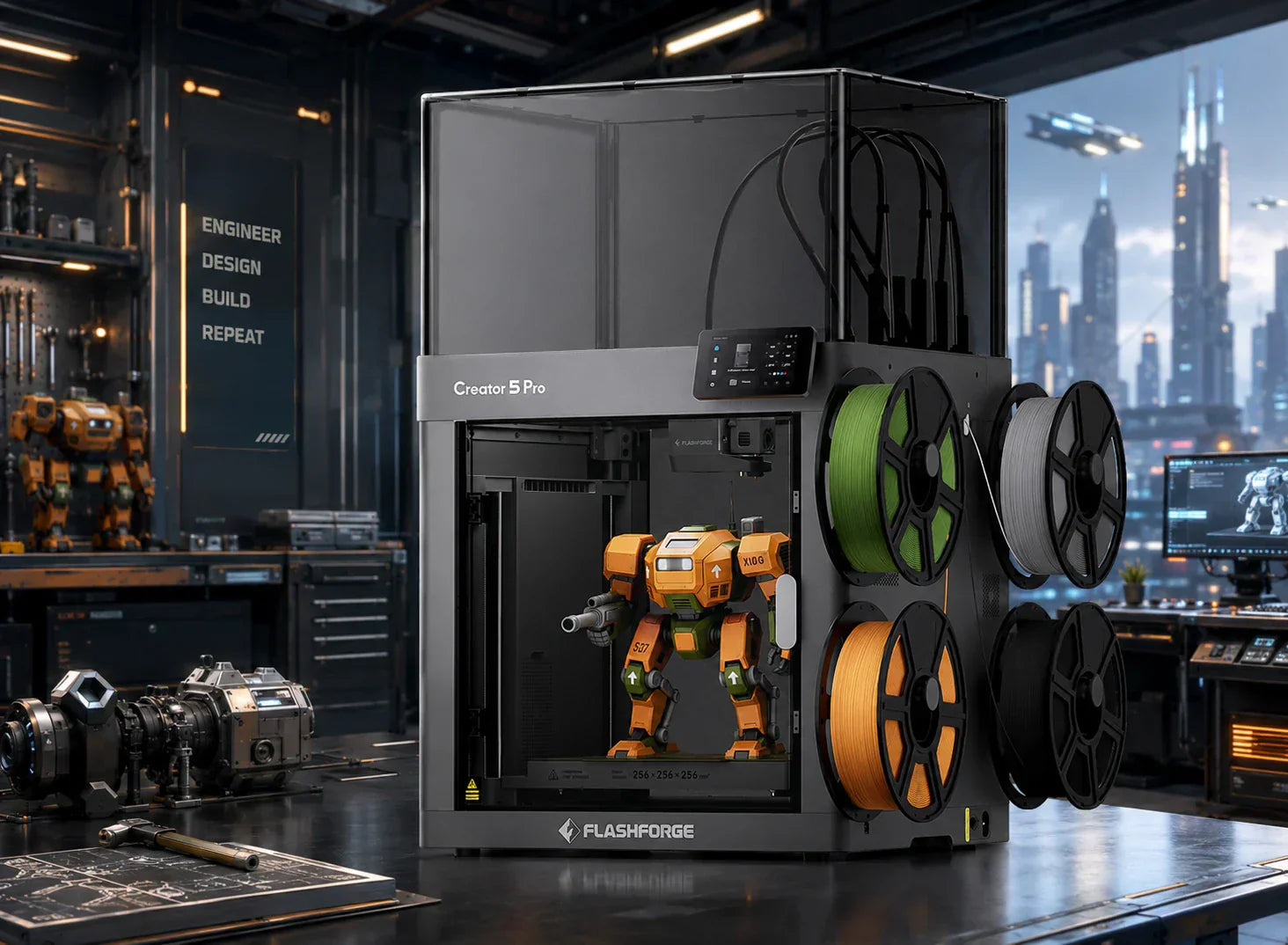
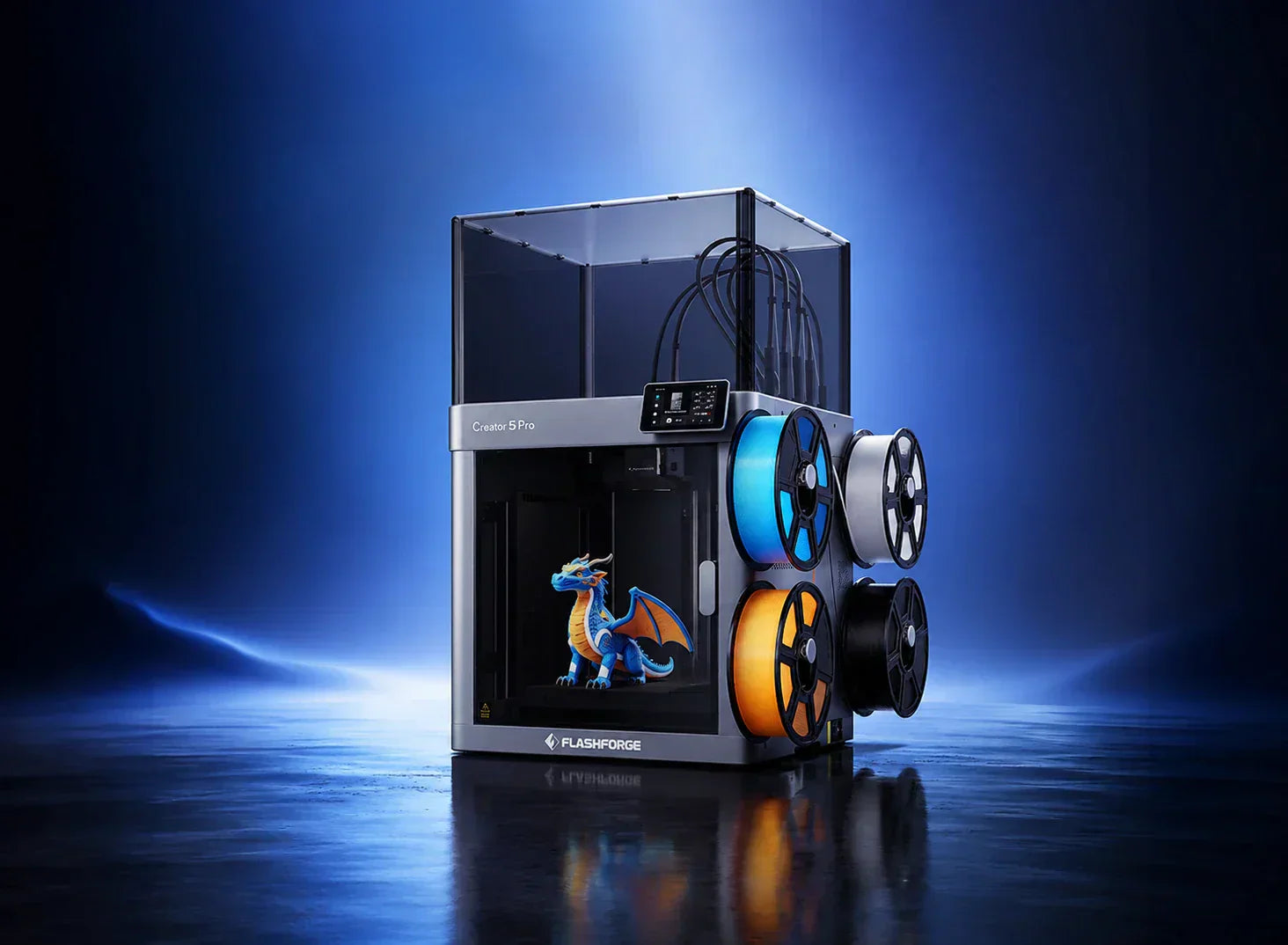
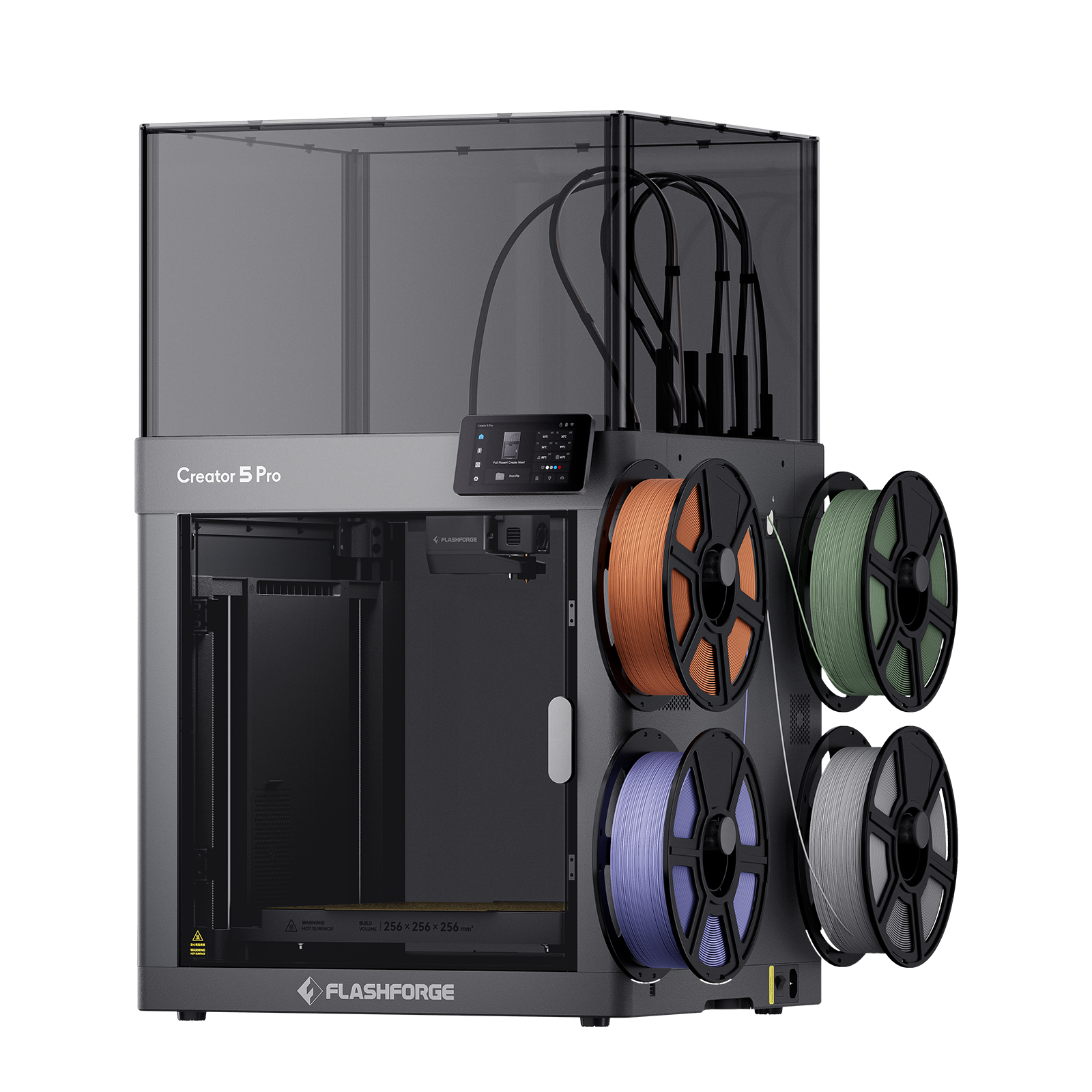
The engineering status of nylon in the additive manufacturing industry is mentioned repeatedly in multiple trend analyses. In end-to-end polymer additive manufacturing systems, nylon materials like PA12 account for a significant revenue share because of their wear resistance, fatigue resistance, and high toughness. They are suitable for structural parts meant for long-term service. FDM nylon filament is highly hygroscopic and usually requires drying before 3D printing. The process requires a high-temperature nozzle, a heated build plate, and a high ambient temperature, which sets clear requirements for equipment configuration. For users planning to create motor mounts, fixtures, or functional hinges, an enclosed high-temperature Creator 5 Pro 3D Printer that supports PA and PA-CF can significantly increase success rates.
Carbon Fiber Reinforced Filaments for Lightweight Strength
Carbon fiber reinforced filament incorporates chopped carbon fibers into PLA, PETG, or nylon bases. This noticeably improves the rigidity and dimensional stability of parts while providing higher flexural strength at the same weight. These materials are excellent for drone frames, mechanical end-effectors, and lightweight structural parts. However, carbon fiber particles wear down brass nozzles quickly, so we suggest using hardened steel or specially coated nozzles with your 3D printer.
How to Choose the Right Filament for Your Printing Needs
After mastering material characteristics, the key is matching project requirements with the right filament. Many users sharing their failures mention a common point: they chose a material based on what others used without considering their own specific environment.
Best Filament for Prototypes and Functional Parts
Functional prototypes must carry specific loads and maintain dimensions and strength during repeated assembly and disassembly. Mechanical property data shows that PLA often has higher tensile strength but remains brittle. PETG offers a more balanced performance in impact and heat resistance. ABS and nylon hold advantages in high-load and fatigue scenarios. Many studios adopt a combination strategy: use PLA for rapid prototyping during structural exploration, switch to PETG or ABS for functional verification, and move to nylon or carbon fiber reinforced filament for final production parts.
Best Filament for Decorative and Display Models
Display models focus on aesthetic quality. PLA offers fine layer lines, rich colors, and low shrinkage. It is easy to sand and paint, making it a primary choice for architectural models, character figures, and gifts. If you want the final 3D printed object to show multiple colors or materials without relying on painting, consider using PLA with a multi-toolhead 3D printer platform like the Flashforge Creator 5 Pro. You can complete the main color, local accents, and support structures in one go, which reduces post-assembly and painting workload.
Best Filament for Outdoor and Heat-Resistant Applications
Outdoor and in-car environments present challenges regarding temperature and UV rays. The hot car test mentioned earlier demonstrates that PLA easily creeps in hot, confined spaces. Thick PETG parts perform slightly better, while ASA and nylon offer higher heat deflection temperatures and more stable dimensions. For 3D printed parts exposed to sunlight for long periods, prioritize PETG, ABS, ASA, or nylon. During the design phase, increase wall thickness and use fillets to reduce stress concentration.
Choosing Filament Based on Strength, Flexibility, or Surface Finish
Strength, flexibility, and surface quality rarely reach extreme levels simultaneously. PLA is rigid and captures details well, PETG resists impact, ABS allows for post-processing and bonding, TPU offers softness and bend resistance, and nylon withstands wear and fatigue. These properties suit different project goals. When planning, categorize your projects into three types: appearance-focused, structure-focused, and flexibility-focused. Assign one or two standard filaments for each category and save your optimized settings as templates for long-term reuse.
Matching Filament Types with Your Printer Capabilities
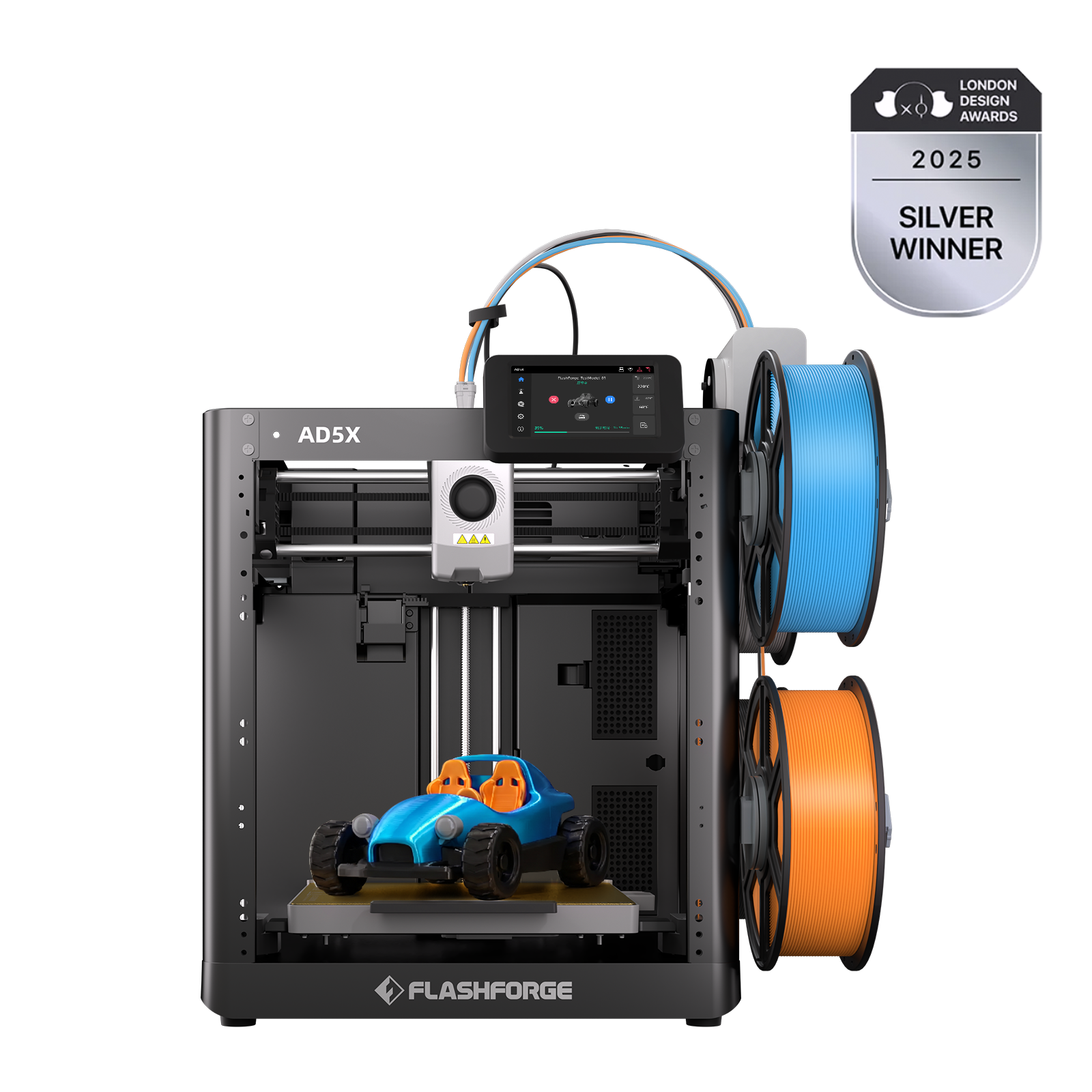
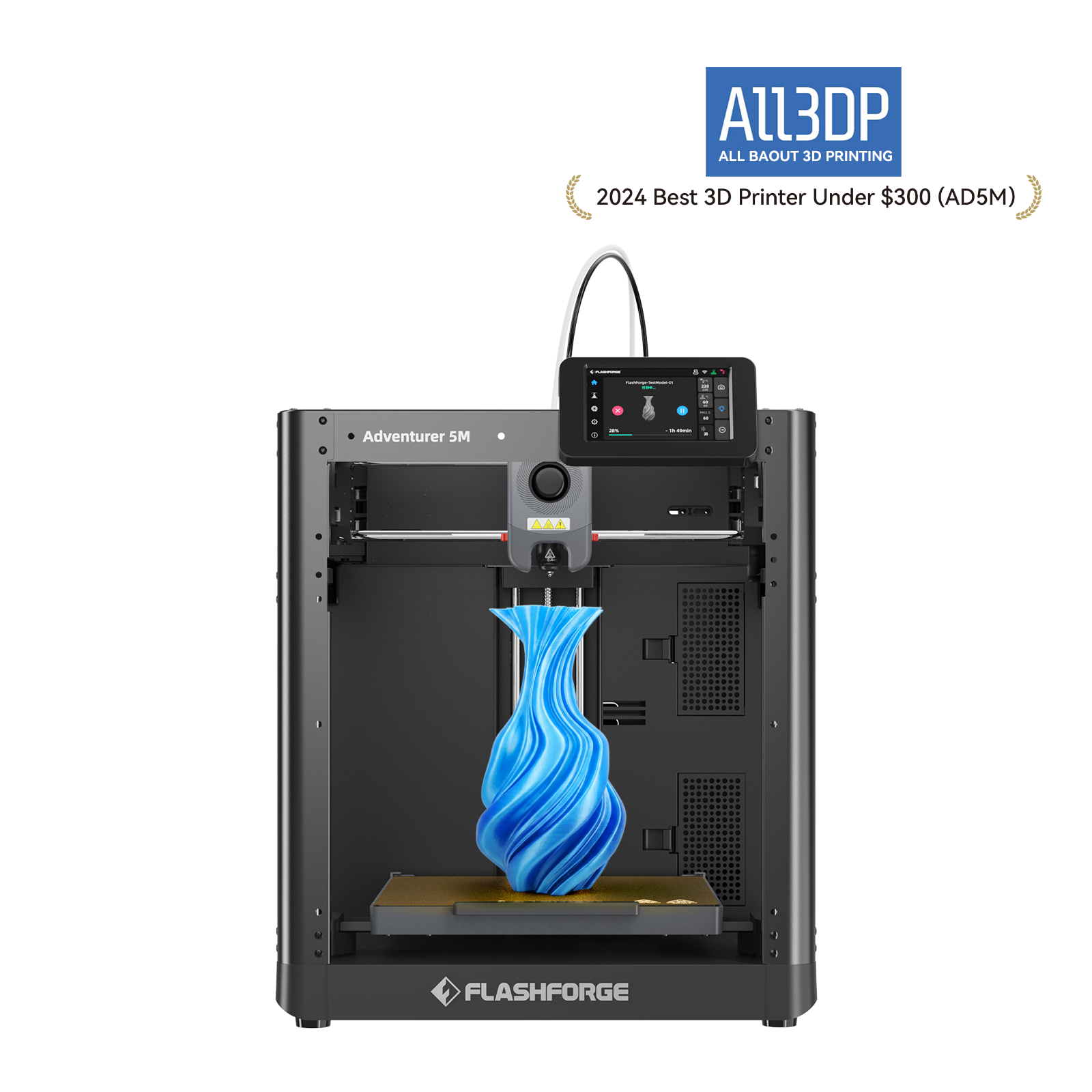
The upper limit of material flexibility is restricted by your 3D printer hardware. If your 3D printer has a maximum nozzle temperature of 240 degrees Celsius, an unstable heated bed, and an open frame, it is difficult to achieve good results with nylon or carbon fiber reinforced filaments. This is why we position the Creator 5 Pro as a high-end 3D printer platform in our lineup. Its enclosed chamber, 320 degrees Celsius hotend, 120 degrees Celsius heated bed, and multi-toolhead design provide a solid foundation for multi-material combinations. The Adventurer 5M covers daily scenarios for PLA, PETG, ABS, and basic TPU with its 280 degrees Celsius nozzle, 110 degrees Celsius heated bed, and 220 by 220 by 220 mm build volume, making it a suitable starting point for moving from single materials to multi-material 3D printing.
Print Settings and Hardware Requirements for Different Filaments
Different filaments have distinct comfort zones. Understanding the applicable temperatures and environments reduces meaningless extreme testing. You can treat the recommended ranges provided by material and 3D printer manufacturers as a safety map.
Recommended Nozzle Temperatures by Material
Combining various sources, you can establish the following approximate nozzle and heated bed temperature ranges as initial references for your 3D printer settings.
|
Material
|
Nozzle Temperature Range
|
Heated Bed Temperature Range
|
|
PLA
|
190–215℃
|
20–60℃
|
|
PETG
|
220–250℃
|
60–80℃
|
|
ABS
|
230–260℃
|
90–110℃
|
|
TPU
|
210–240℃
|
30–60℃
|
|
PA
|
240–270℃
|
70–100℃
|
Heated Bed and Enclosure Requirements
A heated bed warms the contact area between the first layer and the build plate to reduce temperature gradients, which prevents the base from curling. An enclosed or heated chamber ensures a smoother overall environmental temperature, lowering internal stress for high-shrinkage materials. Additive manufacturing trend reports show that industrial polymer 3D printer systems almost universally adopt enclosed structures to lower the risk of cracking and warping for materials like ABS, PA, and PC. For desktop users, you should consider a heated bed and an enclosed chamber as requirements whenever engineering-grade materials are involved. Check our comprehensive guide on how to choose the best FDM 3D printer to learn more about selecting the right hardware setup for your specific projects.
Why Some Filaments Need Hardened Steel Nozzles
Carbon fiber, glass fiber, and metal-filled filaments contain many hard particles. These particles wear down brass nozzles quickly, causing the nozzle inner diameter to widen and the line width to increase. Over time, this affects precision and surface quality. When using these materials, a hardened steel nozzle or a nozzle with a special coating is more suitable. If your 3D printer features multiple nozzles or a multi-toolhead system, you can dedicate a reinforced nozzle to these materials to avoid the errors caused by frequent changes.
Moisture Sensitivity and Proper Filament Storage
Nylon, TPU, and some PETG filaments are extremely sensitive to environmental humidity. If they absorb moisture, you will hear popping sounds during 3D printing, and you will see bubbles on the surface and holes inside the part. Tensile strength and interlayer adhesion will also drop significantly. Industry reports suggest that you should dry high-moisture absorption materials at 60 to 80 degrees Celsius for 4 to 8 hours before 3D printing. Keeping them in a sealed environment or using a dry box during storage is often easier than troubleshooting problems after the fact.
Common Printing Problems and How to Prevent Them
Stringing, porosity, warping, and interlayer cracking are frequent failures across various materials. In real-world hot car tests, a door handle 3D printed with PLA deformed noticeably within one week of summer heat. A user switched to a thick-walled PETG part and extended its service life significantly. Moving further to ASA, the deformation nearly disappeared. The logic behind the failure is straightforward: the environment and load remained the same, while only the material and design changed. By understanding the interaction between the material and the environment, many supposed mysteries become predictable engineering issues.
Comparing PLA, PETG, ABS, and TPU: Which One Is Best?
PLA, PETG, ABS, and TPU make up the core collection for most desktop 3D printer enthusiasts. Determining which is best depends on your criteria rather than simple rankings. The data and real-world performance of different materials form a multi-dimensional coordinate system.
Strength and Durability Comparison
Regarding strength and durability, material strength comparison shows that PLA often has a high ultimate tensile strength but fails in a brittle manner. PETG offers more prominent impact resistance and elongation. ABS has slightly lower overall strength but withstands repeated impacts and higher temperatures. TPU absorbs energy through elasticity, making it ideal for crash buffers and flexible components.
Ease of Printing and Beginner Friendliness
Ease of printing ranks with PLA in the lead, followed by PETG once you tune the parameters. ABS follows, as it requires an enclosed environment. TPU places the highest demands on the extrusion system. If a beginner starts directly with ABS or TPU, frequent failures may cause them to quit. Starting with PLA and gradually challenging yourself with PETG and flexible materials makes it easier to build confidence.
Surface Finish and Visual Quality
Regarding surface appearance, PLA more easily produces sharp edges and fine layer lines. PETG effects are slightly softer. ABS can achieve an excellent appearance after sanding and painting. TPU provides a unique rubbery feel. For users pursuing multi-color and high-completion models, using different PLA combinations on a Creator 5 Pro 3D printer platform balances detail and efficiency.
Heat Resistance and Long-Term Stability
Regarding heat resistance and long-term stability, test results generally point to PLA being suitable for indoor room temperature environments. PETG and ABS can handle most daily high-temperature scenarios. For extreme heat and long-term sun exposure, ASA and nylon offer more reliable performance. TPU softens under heat but remains elastic, making it better for local cushioning.
Cost and Material Efficiency
From a cost perspective, PLA and standard PETG have lower unit prices, while high-performance nylon and carbon fiber reinforced materials cost more. A practical approach to improving material efficiency is breaking projects down into validation samples, trial samples, and final parts, using different cost-level filaments for each.
Conclusion
The 2026 filament market is much more diverse than it was two or three years ago. Beyond a wider variety, quality and stability have reached a higher level. Materials once considered difficult to 3D print are now handled easily by many consumer-grade 3D printers. Filament is shifting from a bottleneck that limits your creativity to a tool that expands your possibilities. Once you understand the characteristics of each material, your 3D printer is no longer just a device for making plastic trinkets. It can do much more than you imagine.