


Many consumer FDM 3D printers cost about $200 to $1,000, while professional systems can range from $1,000 to several thousand dollars. The listed price is only part of the investment because filament, setup accessories, electricity, maintenance, shipping, taxes, and failed prints all affect the total cost of ownership.
This guide explains typical FDM 3D printer prices, the features that increase cost, and how to estimate first-year and long-term spending. It also compares entry-level, multi-color, large-format, and professional machines so you can choose a printer that matches your projects and budget.
How Much Does an FDM 3D Printer Cost?
FDM 3D printer pricing varies widely because the category includes beginner machines, enclosed desktop printers, multi-color systems, large-format models, and professional production equipment.

Average Price Range of FDM 3D Printers
Entry-level FDM printers generally cost about $200 to $400 and are suitable for students, hobbyists, and everyday PLA or PETG projects.
Mid-range machines often cost $400 to $1,000. They may add faster motion systems, easier maintenance, enclosures, multi-color printing, or broader material support.
High-end and professional FDM printers usually start above $1,000 and may cost several thousand dollars. These systems often provide larger build volumes, heated chambers, dual extrusion, multiple toolheads, or more reliable workflows for engineering materials.
What Is Usually Included in the Price of an FDM 3D Printer?
A printer package usually includes the machine, build plate, nozzle assembly, power cable, basic tools, and sometimes a small filament sample. Depending on the model, it may also include an enclosure, camera, filtration system, spare nozzle parts, or manufacturer-supported software.
Extra filament, a dry box or filament dryer, replacement nozzles, cleaning supplies, adhesives, spare build plates, shipping, and taxes may be separate. Compare the final checkout price and included accessories rather than the base price alone.
How Do You Calculate the Total Cost of an FDM 3D Printer?
The real cost of an FDM printer includes what you spend to buy, set up, operate, and maintain it.
FDM 3D Printer Total Cost Calculation Formula
Use this formula:
Total cost = printer price + initial setup cost + operating cost + shipping and taxes + failed-print waste
Printer price is easy to compare. The remaining costs depend on print frequency, material choice, failure rate, and whether the workflow requires multi-color hardware, an enclosure, drying equipment, or engineering-grade nozzles.
Calculating Initial Purchase and Setup Costs
A basic setup may require PLA filament, side cutters, a scraper, isopropyl alcohol, and sealed filament storage. PETG, TPU, ABS, ASA, nylon, and composite filaments may require a dryer, dry box, hardened nozzle, ventilation, or extra build surfaces.
Flashforge’s guide to 3D printer filament types can help you compare storage, drying, nozzle-wear, and hardware requirements before buying accessories.
Estimating Long-Term Operating and Maintenance Costs
Recurring expenses include filament, electricity, nozzles, build plates, maintenance parts, and failed prints. Filament is often the largest regular expense for hobby users, while electricity depends on machine power, print duration, heated-bed use, chamber heating, and local rates.
Estimate electricity cost with:
Power in kilowatts × print hours × local electricity price per kWh
The U.S. Energy Information Administration publishes electricity-price data by state and customer sector, which is more accurate than relying on one national estimate.
FDM 3D Printer First-Year Cost Calculation Example
A beginner buying a $249 printer might spend another $60 to $120 on filament and $20 to $50 on tools and cleaning supplies. After replacement parts, storage accessories, shipping, and taxes, the first-year total may reach roughly $350 to $500.
A multi-material user may spend more on support filament, dryers, hardened nozzles, and maintenance. A dependable printer can still cost less over time if it reduces failed prints and downtime.
What Factors Affect FDM 3D Printer Prices?
Prices rise as printers add build volume, automation, material control, and more complex extrusion systems. Comparing the best 3d printer options can help buyers understand which features are worth paying for based on their projects and budget.
Print Size and Motion System
Larger printers need a bigger frame, heated bed, motion system, and greater structural stability. Long large-format jobs also place more importance on reliable calibration and consistent extrusion.
Motion design affects cost as well. An open-frame bed-slinger can be affordable and effective, while a well-designed CoreXY system may support higher acceleration and greater motion stability.
Open-Frame, Enclosed, and Temperature-Controlled Chamber Designs
Open-frame printers are generally less expensive and work well for PLA and PETG. Enclosed printers add panels, doors, airflow control, and sometimes filtration.
An actively heated chamber costs more but can improve temperature stability for ABS, ASA, PC, PA, and other materials that are sensitive to drafts and uneven cooling. Users printing mainly PLA may not need this feature.
Single-Color and Multi-Color Printing Systems
Single-color printers are usually the least expensive. Multi-color machines require additional feeding, switching, calibration, or tool-changing hardware.
Shared-nozzle systems are often more accessible but can generate purge waste during color changes. Independent toolheads cost more upfront but reduce repeated unloading and purging, especially in jobs with frequent color or material changes.
Material Compatibility and Printing Hardware
Broader material support may require higher nozzle and bed temperatures, a rigid extruder, hardened nozzles, an enclosure, chamber control, and filament drying. PLA and PETG are relatively easy to support, while ABS, ASA, PC, PA, TPU, and fiber-filled materials demand more careful hardware selection.
Flashforge’s FDM printer buying guide explains why speed, material support, build volume, automation, and reliability should be evaluated together.
How Much Should You Budget for an FDM 3D Printer?
Choose a budget based on part size, material requirements, desired automation, and how much troubleshooting you are prepared to do when selecting a 3d printer.
Entry-Level FDM 3D Printer Price
Entry-level FDM printers usually cost $200 to $400 and suit beginners, students, and routine PLA or PETG printing.
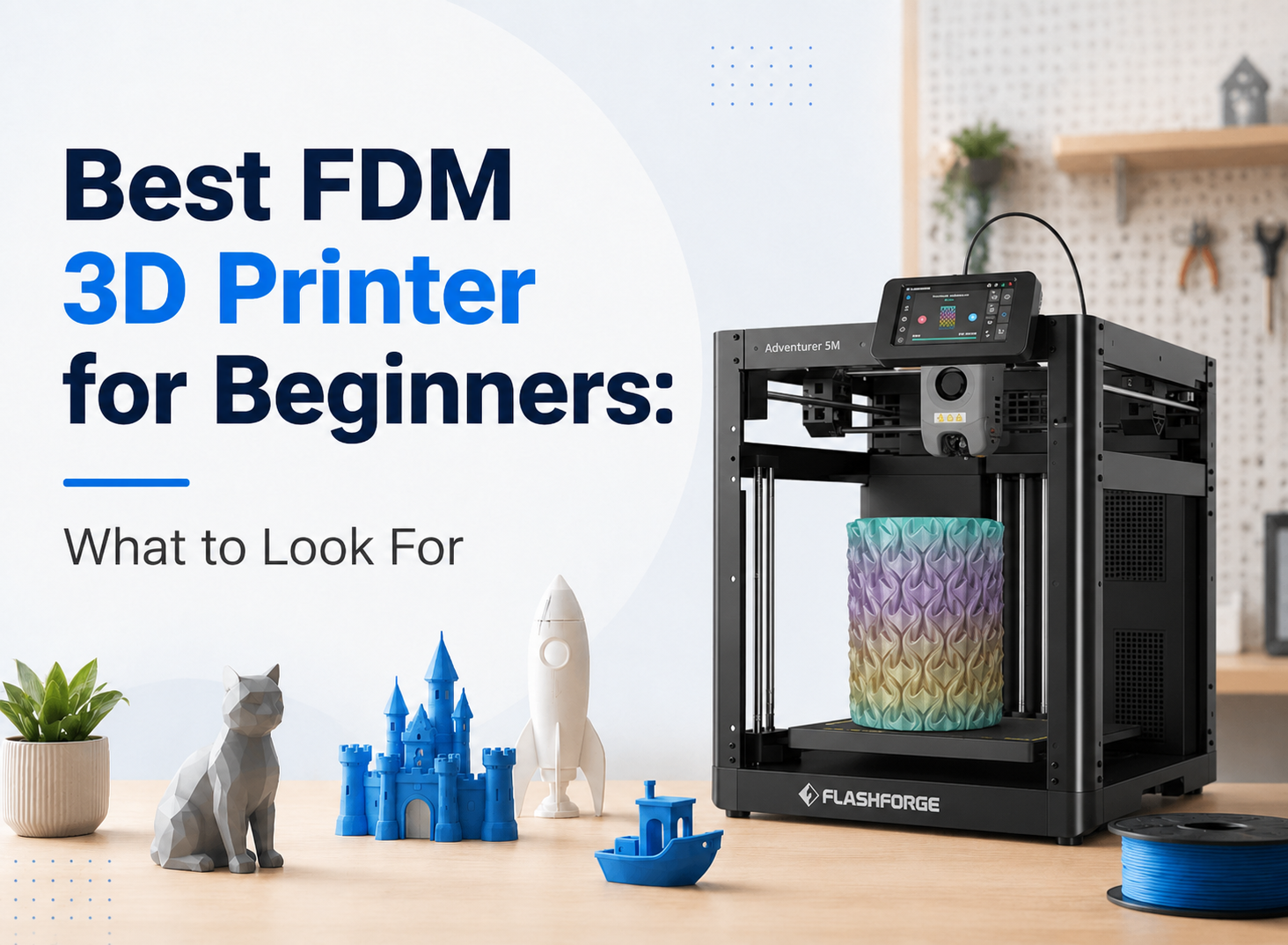
The Flashforge Adventurer 5M currently costs approximately $249 before applicable sales tax after the automatic cart discount on the U.S. site. It includes automatic leveling, an all-metal CoreXY structure, quick-detach nozzles, and a 220 × 220 × 220 mm build volume. It is suitable for learning projects, organizers, toys, brackets, and basic prototypes.
Mid-Range FDM 3D Printer Price
Mid-range printers suit creators and small studios that need more than basic single-color printing.
The Flashforge Creator 5 currently costs approximately $699 before applicable sales tax after the automatic cart discount. Its four independent toolheads can each hold a different color or material, reducing repeated loading and much of the purge waste associated with shared-nozzle systems. It also provides a 256 × 256 × 256 mm build volume, a maximum print speed of 300 mm/s, and a maximum travel speed of 600 mm/s.
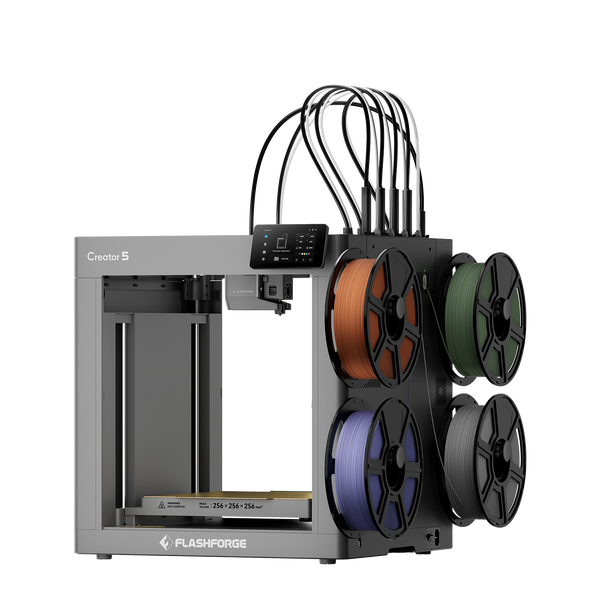
Flashforge Creator 5 4-Toolheads Multi-Color 3D Printer | 500% Faster, Zero Purge Waste
The Flashforge Creator 5 Pro currently costs approximately $849 before applicable sales tax after the automatic cart discount. It adds a fully enclosed frame, HEPA and activated-carbon filtration, and active chamber heating up to 65°C, making it better suited to ABS, ASA, PC, PA, and selected composite materials.
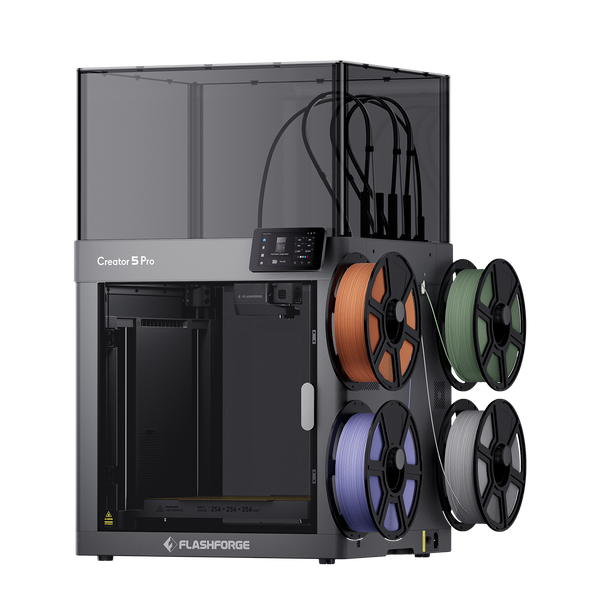
Flashforge Creator 5 Pro 4-Toolheads Enclosed Multi-Color 3D Printer | 500% Faster, Zero Purge Waste
High-End FDM 3D Printer Price
High-end FDM printers often cost about $1,000 to $3,000. This tier is aimed at advanced creators, educators, design studios, and users who need better automation, stronger material control, or more dependable repeated production.
The extra cost is worthwhile only when the printer saves setup time, reduces failures, expands usable materials, or supports a production requirement.
Professional and Custom FDM 3D Printer Price
Professional and custom FDM systems commonly cost more than $3,000 and are used by labs, schools, print farms, engineering teams, and businesses.
With a price of $3,999 before applicable sales tax, the Flashforge Guider 3 Ultra is positioned as a professional large-format FDM 3D printer for advanced prototyping and small-batch production. It uses a CoreXY structure and dual extruders, with a maximum build volume of 330 × 330 × 600 mm in single-extruder mode and 300 × 330 × 600 mm when both extruders are active. It is designed for tall prototypes, large functional parts, and soluble-support workflows.
FDM 3D Printer Price Comparison by Budget Range
| Budget Range | Typical Printer Type | Best For | Common Features |
| $200–$400 | Entry-level desktop | Beginners, students, PLA and PETG projects | Auto leveling, standard build volume, basic material support |
| $400–$1,000 | Mid-range desktop | Creators, multi-color users, small studios | Faster motion, enclosure options, multi-color or multi-toolhead systems |
| $1,000–$3,000 | High-end desktop | Advanced users, education, repeated prototyping | Better automation, stronger material control, production-focused features |
| $3,000+ | Professional or large-format | Labs, engineering teams, print farms | Large build volume, dual extrusion, advanced calibration, production workflows |
Prices and promotions can change by region, warehouse, bundle, and sale period, so confirm the live product page before ordering.
How Can You Avoid Hidden Costs and Stay Within Budget?
Define the parts and materials you actually plan to print. A user making small PLA organizers may not need a heated chamber or four toolheads, while an engineering workflow may justify a higher initial price to reduce warping and failed jobs.
Compare the final purchase cost, included accessories, replacement-part availability, and maintenance process. Quick-detach nozzles, flexible build plates, tested slicer profiles, and accessible support can reduce downtime.
Use dry filament, clean build surfaces, suitable materials, and tested profiles to limit failed prints. Schools, businesses, and print farms should also request volume-pricing or configuration information before purchasing multiple machines.

Conclusion
An FDM 3D printer can cost a few hundred dollars or several thousand. A $200 to $400 printer is enough for many beginners, while multi-color, engineering-material, and large-format workflows require a higher budget.
Compare total ownership cost rather than the listed price alone. Include filament, accessories, electricity, maintenance, shipping, taxes, and failed-print waste. The best-value printer is the one that fits your actual materials, part sizes, and workload without adding features you will not use.FAQ
Do You Need to Buy Paid Slicer Software for an FDM 3D Printer?
How Much Electricity Does an FDM 3D Printer Use?
Usage depends on wattage, nozzle and bed temperatures, chamber heating, and print duration. Multiply power in kilowatts by print hours and your electricity price per kWh.
How Much Does It Cost to Print an FDM Part?
Cost depends on filament weight, support material, electricity, machine time, failed prints, and post-processing. A small PLA part may cost cents to a few dollars in material, while a large engineering part can cost much more.
Is the Long-Term Cost of an FDM 3D Printer Lower Than a Resin 3D Printer?
It can be. FDM avoids liquid-resin washing and UV curing, but the better choice depends on part size, detail requirements, consumables, and failure rate.
Is Buying an FDM 3D Printer More Cost-Effective Than Using a 3D Printing Service?
How Long Does It Take for an FDM 3D Printer to Pay for Itself?
Payback depends on usage and the value of the parts produced. Frequent prototypes, fixtures, replacement parts, or small batches can shorten the payback period, while occasional users may gain more value from convenience and learning.